

Homemade Applesauce Recipe: Easy Way to Make Applesauce at Home
By Captain Cooking

Homemade Applesauce is one of the most useful ways to turn fresh apples into a smooth, spoonable sauce with clean flavor.
You control the sweetness, spice level, and texture, so the final result matches how you plan to serve it (snack, baking, or a side).
This recipe also works well when you have apples that are soft for eating but still good for cooking, because simmering brings back their best flavor.
Key Takeaways
What You Need for the Perfect Applesauce Recipe
This Homemade Applesauce recipe relies on two things: good apples and steady, low heat. When apples soften slowly, their natural sweetness comes through without tasting flat.
A heavy pot helps prevent scorching, and a quick mash or blend finishes the texture. If you like spice, add it lightly at first and build it after tasting.
Choosing the Best Apples for Your Sauce
The best apples for applesauce depend on your goal: bright and tangy, or mellow and sweet. Firmer apples often give a cleaner flavor, while softer apples break down quickly and create a smoother base.
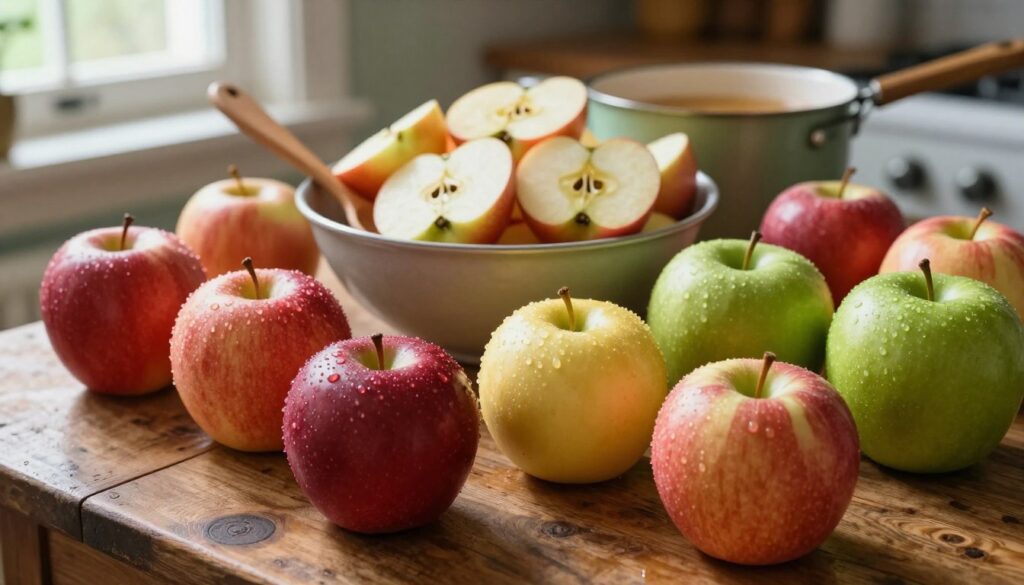
Mixing apple varieties creates richer flavor than using just one type. Apples that are slightly soft or bruised (but not spoiled) are often ideal here, because cooking evens out texture and concentrates flavor.
Here are some of the best apples for applesauce:
Using a mix of sweet and tart apples helps the finished applesauce taste lively instead of sugary. If your apples are very sweet, a small amount of tart apple can keep the flavor in balance.
Plan your batch size based on how you’ll use it: smaller batches are great for quick snacks, while larger batches help if you’re freezing or meal-prepping. For yield and exact measurements, follow the recipe card.
Essential Ingredients and Equipment
Basic Ingredients for Homemade Applesauce
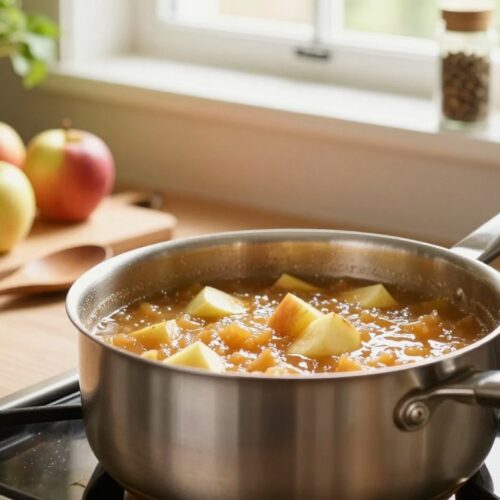
Homemade Applesauce
Ingredients
- 3 pounds apples about 6–8 medium apples, peeled, cored, and chopped
- 1/4 cup water
- 2 tablespoons sugar or honey optional
- 1/2 teaspoon ground cinnamon
- 1 tablespoon lemon juice
- 1 pinch salt
Instructions
- Wash, peel, core, and chop the apples into small chunks.
- Place the apples in a large saucepan with water, sugar (optional), cinnamon, lemon juice, and salt.
- Bring the mixture to a gentle boil over medium heat.
- Reduce heat to low, cover, and simmer for 15–20 minutes until the apples are soft and tender.
- Remove the lid and cook for an additional 5 minutes to thicken the sauce slightly.
- Mash the apples with a potato masher for a chunky texture or blend for a smooth applesauce.
- Taste and adjust sweetness or cinnamon if needed.
- Let cool before serving or store in the refrigerator.
Notes
- For smoother applesauce, use an immersion blender or regular blender.
- Use a mix of sweet and tart apples for the best flavor.
- Store in the fridge up to 7 days or freeze up to 3 months.
For Homemade Applesauce, water (or another cooking liquid listed in the recipe) helps the apples steam and soften without sticking. Sweetener is optional, and it’s best added after tasting because apple varieties can be very different. Cinnamon is a classic option, but use a light hand so the apple flavor stays in front.
For exact ingredient measurements and timing, use the recipe card above.
“Homemade applesauce works well because you control the ingredients, the sweetness, and the final texture instead of relying on a one-size-fits-all jar.”
Kitchen Tools You Will Need
Use a large, heavy-bottomed pot to reduce hot spots, plus a knife and cutting board for prep. For texture, a potato masher keeps it rustic, while an immersion blender, blender, or food mill gives a smoother finish. A lid helps the apples steam evenly, which can reduce the need for extra liquid.
Step-by-Step Instructions for Making Homemade Applesauce
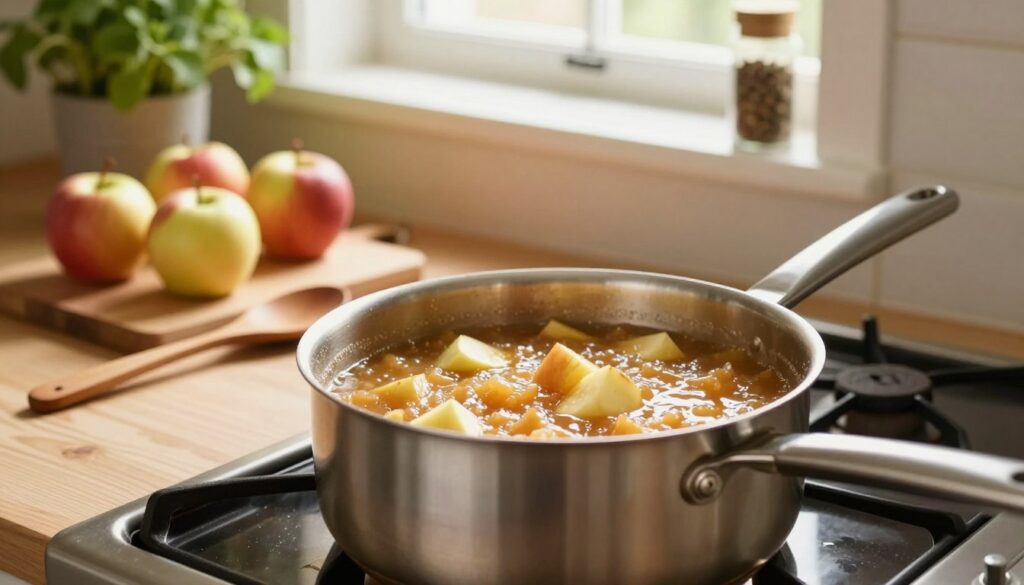
Homemade Applesauce comes down to softening the apples gently, then finishing the texture the way you like it. Keep the heat low so the fruit cooks through without scorching, and stir from the bottom to prevent sticking. Follow the full instructions in the recipe card above, and use the notes below to fine-tune flavor and consistency.
Texture Options: Chunky or Smooth Applesauce
For a chunkier texture, mash the softened apples and stop as soon as you like the bite. For smooth applesauce, blend briefly and check often, because over-blending can make it feel thin. If it tastes a little flat after blending, a small pinch of salt or a touch more cinnamon can bring the apple flavor forward.
Important Safety and Troubleshooting Tips
Never stir burned applesauce into the rest of your batch. Stirring spreads the scorched taste. Instead, carefully transfer the unburned portion to a clean pan and continue on low heat, stirring more often.
If your applesauce looks watery, let it simmer uncovered for a short time so moisture can evaporate, then re-check texture. If it tastes too tart, adjust with a little sweetener after cooking; if it’s too sweet, a tart apple variety next time can help rebalance. Foam on top is normal while cooking and usually settles as the sauce cools.
Homemade Applesauce thickens slightly as it cools, so avoid over-correcting while it’s still hot. If you’re not sure, cool a spoonful on a plate, taste it, and then decide if it needs more spice or sweetness.
Health Benefits of Homemade Applesauce
Nutritional Benefits of Applesauce
Homemade applesauce can be a simple way to enjoy fruit in an easy-to-eat form. Apples naturally contain fiber and plant compounds, and the final nutrition depends on choices like peeling, added sweetener, and portion size.
Because you control what goes in, this recipe can be made with little to no added sugar and without preservatives. If you’re serving kids, tasting and adjusting at the end helps you keep sweetness moderate.
Applesauce can also be easier to eat than raw fruit for some people, especially when you keep the texture smooth. If you need a specific nutrition plan, treat this as general food information and follow guidance from a qualified professional.
Ways to Use Homemade Applesauce
Homemade Applesauce fits into meals in a few practical ways: as a snack, a topping, or a cooking helper. Keep it plain when you want flexibility, and add cinnamon when you want a warmer flavor.
This applesauce pairs well with savory dishes like our roasted Cornish hen or tender beef ribs, adding a mild sweetness that balances richer flavors.
Serve it with breakfast alongside pancakes, waffles, or oatmeal, or spoon it over yogurt for quick texture and sweetness. If you’re using it as a topping, a chunkier texture usually holds up better.
In savory cooking, applesauce can work with pork, chicken, or roasted vegetables, especially when the sauce is not overly sweet. Taste the dish at the end and add applesauce in small amounts so it supports the main flavor instead of taking over.
For baking, applesauce is often used to add moisture and a mild fruit sweetness. When you try it in a recipe, start with a small test batch so you can learn how it changes texture in your oven.
How to Store Homemade Applesauce
Cool the applesauce promptly, then store it in clean, airtight containers so it keeps its flavor and doesn’t pick up fridge odors. For exact storage timelines and best practices, follow the storage notes in the recipe card.
If you freeze it, leave a little space in the container for expansion and label portions so they’re easy to use later. Thaw in the refrigerator and stir well, because separation can happen naturally.
For long-term pantry storage, only use tested canning methods and follow reliable guidance for safe processing. A strong reference is the National Center for Home Food Preservation, which explains safe home-canning practices and recipe standards.
Final Thoughts
Homemade Applesauce is a straightforward recipe that rewards small, smart choices: a good apple mix, low heat, and tasting at the end. Once you learn your preferred texture, you can keep it smooth for spooning or leave it chunky for toppings.
Use the recipe card for the exact method, then apply the troubleshooting tips here to adjust thickness, sweetness, and spice. Whether you serve it with breakfast, stir it into yogurt, or bake with it, the same basics make it consistent.
Try different apple combinations to find the flavor you like most, and keep notes so you can repeat the result next time. Small changes in apples can shift sweetness, so tasting is your best tool.
If you try this applesauce recipe, leave a comment and share which apple varieties you used and whether you went smooth or chunky.