

Lasagna Recipe – Easy Homemade 3-Cheese Bake
By Captain Cooking
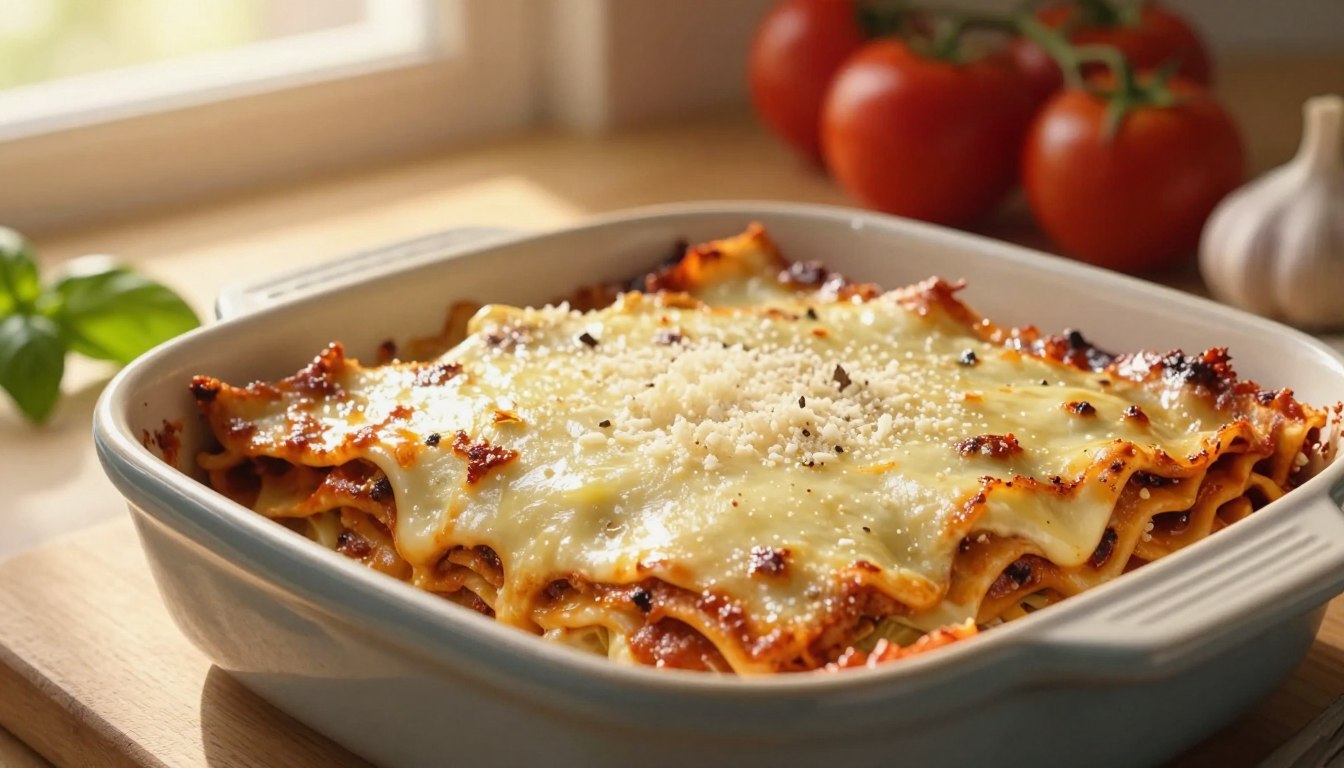
A good lasagna recipe depends on three technical choices: sauce that is reduced enough to taste concentrated, cheese filling that stays stable when baked, and noodles handled so the layers stay defined instead of merging into one mass.
This version is practical to assemble ahead and dependable when reheated. If you also like structured baked pasta dishes, our baked ziti recipe uses a similar make-ahead approach.
Key Takeaways
What Makes This Lasagna Recipe Stand Out
The main advantage of this lasagna recipe is control. Each component does a specific job, so the finished bake has definition, balanced richness, and a top that browns without the center turning loose or watery.
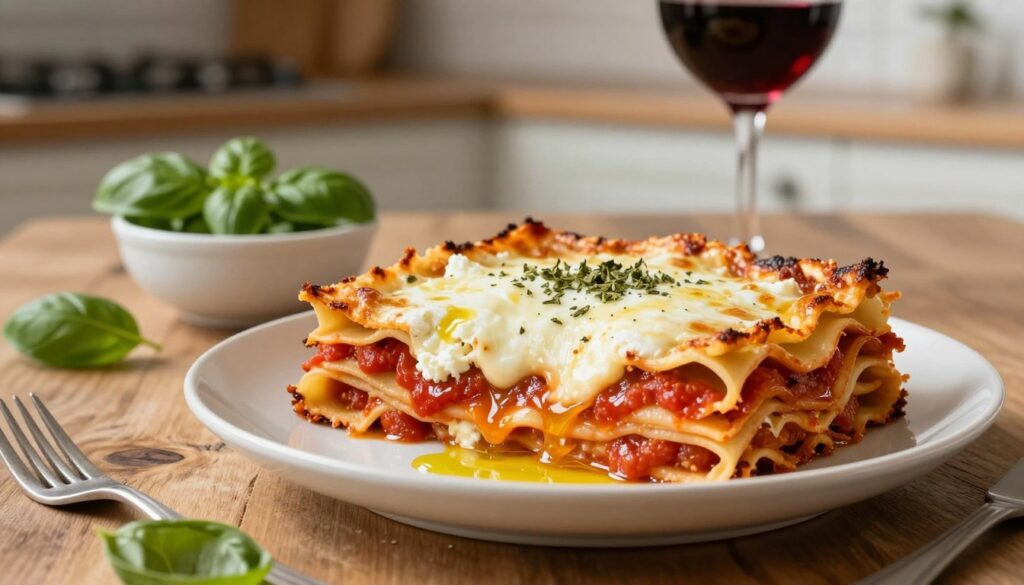
The Three-Cheese Filling Explained
Ricotta gives body, mozzarella gives melt, and parmesan brings salt and depth. What matters most is even distribution across the layers so no section feels heavy while another turns dry.
Egg is useful here because it firms the filling as it bakes. Whole-milk ricotta usually gives a smoother result than lighter versions, and a little nutmeg can lift the dairy flavor without making the filling taste sweet.
Building the Meat Sauce
The sauce needs reduction more than complexity. Browned meat, cooked tomato paste, and enough simmering time create concentration. That thicker texture helps the lasagna recipe slice neatly and prevents liquid from collecting at the bottom of the pan.
Noodle Handling for Better Layers
The noodles should stay slightly firm before baking because they continue to soften in the oven. That final finish in the sauce is what helps the layers lock together instead of turning mushy.
No-boil noodles work well when the sauce is loose enough to hydrate them. Traditional noodles work well when they are not fully cooked before assembly. In both cases, this lasagna recipe benefits from sauce reaching every edge.
Ingredients for a Classic Lasagna Recipe
The ingredient list is familiar, but the results improve when you choose whole-milk dairy, flavorful tomatoes, and meat with enough fat to enrich the sauce naturally. The recipe card below covers the exact amounts.
Homemade Lasagna Recipe
Ingredients
Meat Sauce
- 1 lb 450g ground beef, 80/20
- 1 medium yellow onion diced
- 2 –6 garlic cloves minced
- 1 tablespoon olive oil
- 3 tablespoons tomato paste
- 28 oz 800g marinara sauce or crushed tomatoes
- ¼ to 1 cup dry red wine
- ½ teaspoon salt
- ¼ teaspoon black pepper
- ¼ teaspoon dried thyme
- ½ to 2 teaspoons sugar
- 2 tablespoons fresh parsley chopped
- Fresh oregano and basil to taste
Cheese Filling
- 15 –16 oz 425–450g whole-milk ricotta cheese
- 1 large egg
- ¼ teaspoon nutmeg
- 2 tablespoons fresh parsley chopped
- 1 cup shredded mozzarella from the total below
Assembly
- 4 cups shredded mozzarella divided (includes the 1 cup above)
- ½ cup grated parmesan cheese
- 9 –12 lasagna noodles traditional or oven-ready
Instructions
- Make the meat sauce. Heat olive oil in a large skillet over medium-high heat. Add ground beef and brown without stirring for 1 minute, then break it up and cook for about 5 minutes until fully browned. Add minced garlic and cook for 1 minute. Add diced onion and cook for 6–8 minutes until soft and translucent.
- Build the sauce. Stir in tomato paste and cook for 1 minute. Deglaze with red wine, scraping the bottom of the pan, and cook off the alcohol for 2–3 minutes. Add marinara, salt, pepper, thyme, and sugar. Bring to a boil, then reduce to a low simmer uncovered for 40–45 minutes, stirring occasionally. Stir in fresh herbs at the very end. Taste and adjust seasoning.
- Make the cheese filling. In a bowl, combine ricotta, egg, parsley, nutmeg, and 1 cup of shredded mozzarella. Mix until smooth and thick. Refrigerate until needed, up to 2 hours.
- Prepare the noodles. If using traditional noodles, boil in salted water for 4 minutes only (not fully cooked). Drain, rinse with cold water, and lay flat on oiled parchment paper. Skip this step for oven-ready noodles.
- Preheat and prep. Preheat oven to 375°F (190°C). Grease a 9×13 inch baking dish. Spread a thin layer of meat sauce across the bottom.
- Assemble the layers. Layer in this order: noodles → meat sauce → shredded mozzarella → ricotta mixture. Repeat twice. Finish with a final layer of noodles, remaining meat sauce, and all remaining mozzarella on top.
- Bake covered. Insert 8–12 toothpicks into the top to prevent foil from sticking to the cheese. Cover tightly with aluminum foil. Bake for 30–45 minutes.
- Brown the top. Remove foil and broil for 3–5 minutes until the top is golden and bubbling.
- Rest before serving. Remove from oven and rest for at least 15 minutes before cutting. This allows the layers to set for clean slices.
Notes
- Make ahead: Assemble the night before, cover, and refrigerate. Add 5–10 extra minutes to covered bake time since it starts cold.
- Freezing: Wrap tightly in plastic then foil, pressing out all air. Freeze unbaked or fully baked for up to 3 months.
- Reheating from frozen: Thaw overnight in the fridge. Bake covered at 325°F for 45 minutes, then uncover and raise to 375°F for 15–30 minutes until the internal temperature reaches 165°F (74°C).
- Reheating leftovers: Place a single slice in a cold oven at 350°F, cover with foil, and check at 20 minutes.
- Ricotta tip: If your ricotta looks watery, drain it through a fine mesh strainer for 15 minutes before mixing.
- No-boil noodles: Make sure your sauce has enough moisture to hydrate them during baking. Thin the sauce slightly if it’s very thick.
- Toothpick trick: Count toothpicks before baking and again before serving—don’t skip this.
- Storage: Leftovers keep refrigerated for up to 5 days, tightly covered.
Meat Sauce Components
The sauce works best when the meat is browned first, the aromatics are softened without scorching, and the tomato base is cooked until it loses its raw edge. Tomato paste is especially useful because it adds depth without thinning the sauce.
Wine is optional, but acidity and reduction are not. Season gradually, taste after simmering, and use herbs near the end. The flavor is usually better the next day, which is one reason this lasagna recipe suits advance prep.
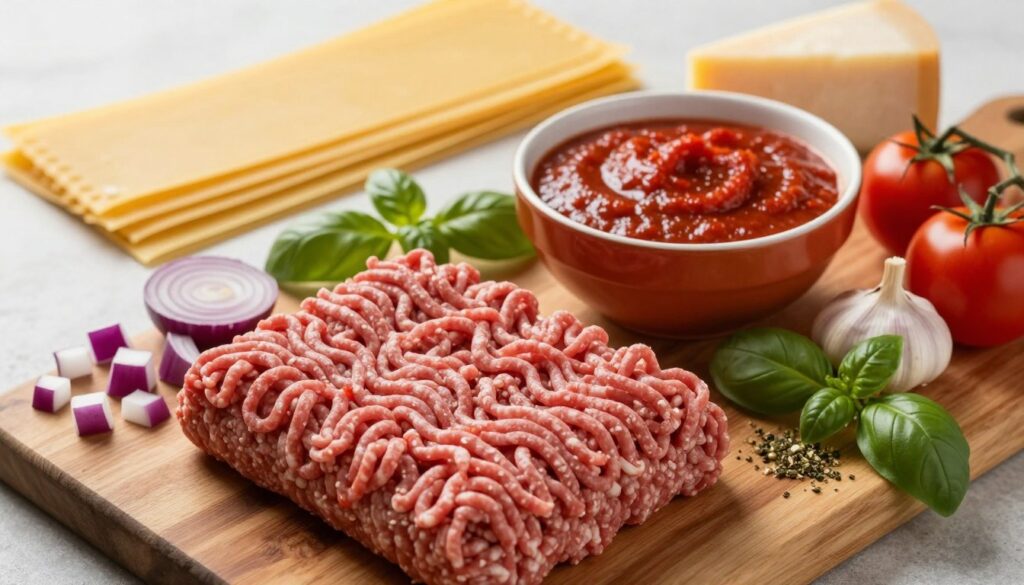
Cheese Filling Ingredients
Whole-milk ricotta gives a smoother texture, mozzarella handles the stretch, and parmesan sharpens the overall flavor. Cottage cheese can work too, but it changes the texture and usually needs draining first.
Pasta and Assembly Notes
A thin base layer of sauce protects the bottom noodles, and even spreading keeps the structure consistent from corner to center. The order matters less than the balance: every layer needs sauce, pasta, and dairy working together.
Think of it the way a traditional Italian baked pasta is structured: every layer contributes to the finished texture. Working with chilled filling also makes spreading easier and helps avoid tearing the noodles underneath.
Step-by-Step: How to Make This Homemade Lasagna
The easiest way to manage the workflow is to treat sauce, filling, and assembly as separate jobs. That keeps the process organized and reduces the chance of watery layers or rushed seasoning adjustments.
Preparing the Meat Sauce
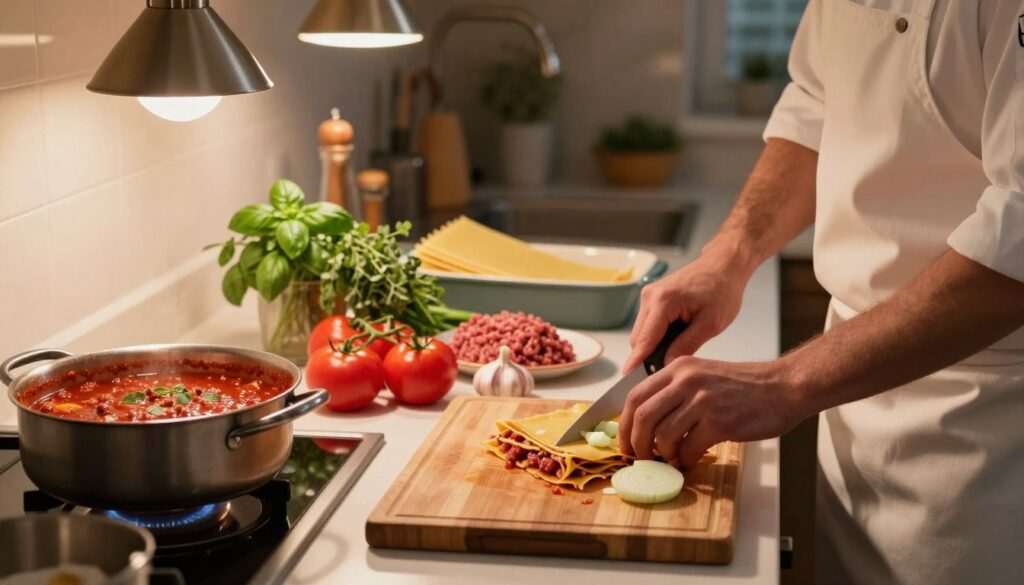
Start by developing color on the meat instead of stirring constantly. Then soften the aromatics, cook the tomato base until it darkens slightly, and simmer until the sauce tastes rounded rather than sharp.
Before assembly, the sauce should coat a spoon instead of running off like soup. That single cue does more for structure than adding extra cheese later. For readers who enjoy faster pasta nights, our easy carbonara recipe is a useful contrast.
Creating the Cheese Filling
Mix the filling until smooth and check for excess moisture before using it. If it feels loose, draining it briefly improves the final texture. Cold filling is easier to spread and less likely to drag the pasta out of place.
Assembling and Baking
Build the layers evenly rather than thickly. A balanced stack bakes more predictably than one with overloaded cheese or sauce concentrated in the center.
- Start with sauce so the first pasta layer does not stick.
- Spread filling edge to edge to avoid dry corners.
- Keep the top layer covered with enough sauce to protect the noodles.
- Finish with cheese that can brown without burning too early.
Covering the dish early keeps the top from drying before the center heats through. The last step is the rest after baking. Without that pause, even a well-made lasagna recipe will cut poorly because the filling has not had time to settle.
If you prepare it ahead, bring the dish closer to room temperature before baking when possible. For another make-ahead dinner, our beef ribs recipe also reheats well.
Storage, Freezing, and Reheating
Lasagna reheats best when moisture is trapped. Cover it, warm it gently, and avoid aggressive heat at the start. That method protects the edges from drying before the center is hot.
For freezing, wrap tightly so air cannot dry the surface. Thawing in the refrigerator usually gives more even reheating than moving directly from freezer to oven. This lasagna recipe is especially useful for batch cooking because the structure remains stable after reheating.
Final Thoughts
A reliable lasagna recipe is less about excess ingredients and more about proportion, moisture, and patience. When the sauce is reduced, the filling is stable, and the bake is allowed to rest, the layers cut cleanly and reheat well.
Once you understand those mechanics, this lasagna recipe becomes easy to repeat, adjust, and prepare ahead without losing texture.