

Homemade Pickles: Easy Refrigerator Method with Custom Flavors
By Captain Cooking
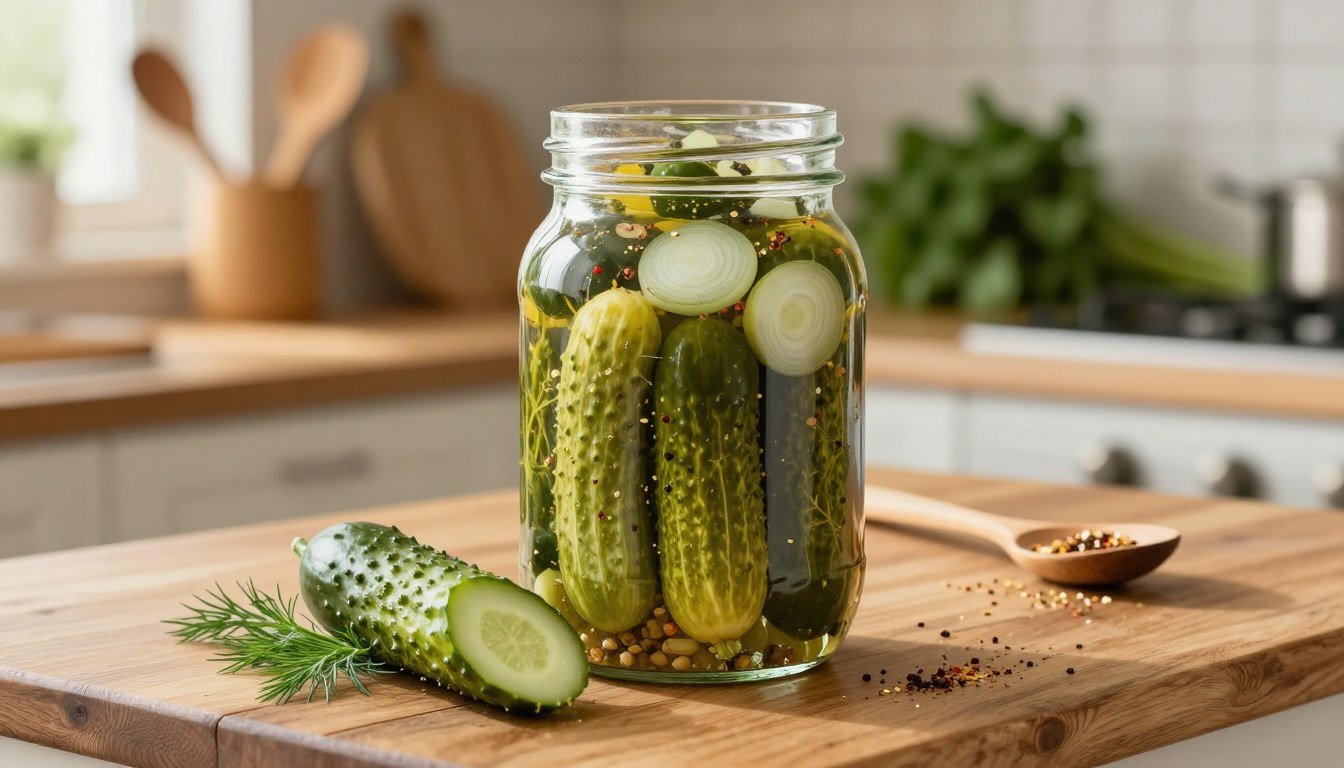
Homemade Pickles are one of the fastest ways to add clean, tangy crunch to meals without special canning equipment. This article focuses on refrigerator-style Homemade Pickles, where the brine does the work and the fridge keeps everything safe.
Instead of repeating the recipe card, you’ll learn the “why” behind each step: how to keep Pickles crisp, how to balance acidity and salt, and how to customize flavor without ending up with harsh, one-note brine. You’ll also find troubleshooting for soft pickles, cloudy brine, and overly salty results, plus serving ideas that actually fit everyday meals.
Key Takeaways
What Are Pickles?
Pickles are vegetables or fruits preserved in an acidic brine, most often vinegar-based. Homemade Pickles are the same idea, but you control the ingredients, the salt level, and the spice profile so the final jar matches how you actually eat them.
Unlike fermented pickles, quick refrigerator pickles rely on vinegar and cold storage. That means Homemade Pickles can be ready quickly, but texture depends heavily on vegetable freshness, cut size, and how hot the brine is when it hits the jar.
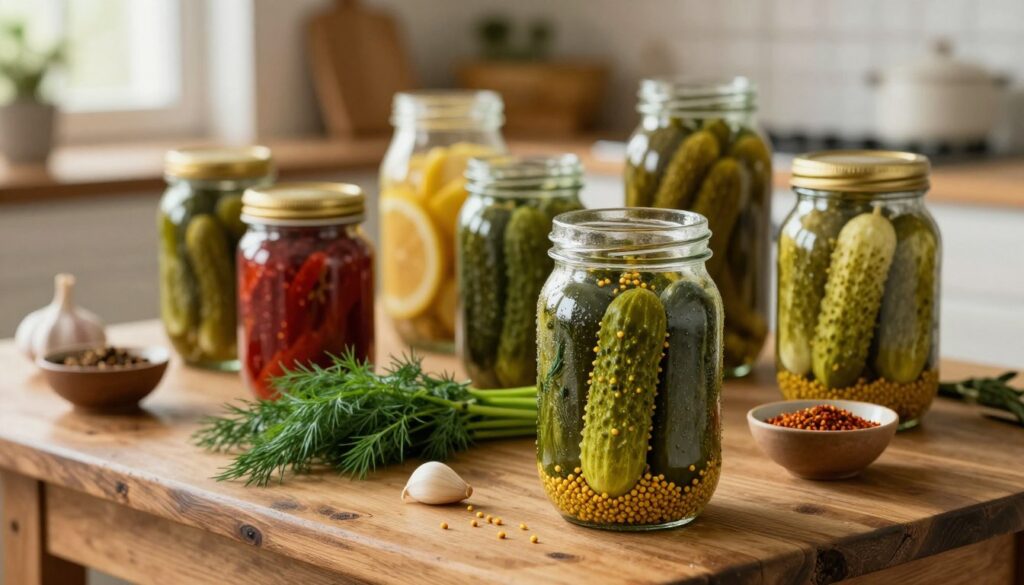
Homemade Pickles are also easy to customize without changing the method. You can push them toward classic dill, add garlic for depth, use peppercorns for bite, or introduce citrus for a brighter finish. The goal is to build flavor without masking the vegetable’s natural crunch.
Pickles Recipe
This section supports the recipe card with technique notes, so you can get consistent results. Homemade Pickles depend on two things you can control: the condition of the vegetables and the brine balance. If your vegetables are very fresh and your slices are even, the brine can penetrate at the same rate, which gives you uniform tang and crunch.
For Homemade Pickles, choose firm vegetables with tight skin and no soft spots. Watery or overripe produce tends to turn limp after brining. If you’re using cucumbers, keep them cold before slicing; starting cold helps slow down softening. If you want extra crunch, consider adding a pinch of calcium chloride (“pickle crisp”) to the jar—this supports texture without changing flavor.
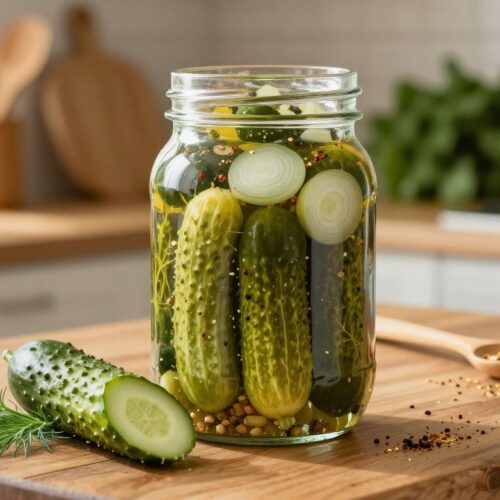
Pickles
Ingredients
- 2 cups cucumbers sliced
- 1 cup white vinegar
- 1 cup water
- 1 tablespoon salt
- 1 tablespoon sugar
- 2 cloves garlic smashed (optional)
- 1 teaspoon mustard seeds optional
- 1 teaspoon black peppercorns optional
- 1 teaspoon dill
- 1/2 teaspoon red pepper flakes optional
Instructions
- Wash and slice the cucumbers into thin rounds or spears.
- In a small saucepan, combine vinegar, water, salt, and sugar.
- Heat over medium heat until the sugar and salt fully dissolve.
- Place cucumbers, garlic, dill, and spices into a clean jar.
- Pour the warm brine over the cucumbers until fully covered.
- Let the jar cool to room temperature, then seal with a lid.
- Refrigerate for at least 2 hours before serving for best flavor.
Notes
- slice cucumbers thin
- cool before refrigerating
- best flavor after 2 hours
Equipment Required
Homemade Pickles don’t require canning gear, but the right basics help. Use a non-reactive saucepan (stainless steel is ideal) so the brine doesn’t pick up metallic flavors. A wide-mouth glass jar makes packing easier and reduces breakage risk. If your slices float, a small clean weight (or a folded piece of parchment under the lid) can help keep vegetables submerged, which prevents dry, uneven pickling at the top.
Step-by-Step Instructions
Use the recipe card for exact amounts and timing. The notes below explain what to watch for at each stage so your Homemade Pickles come out crisp, evenly seasoned, and not overly sharp.
1- Preparing Your Vegetables
Wash and dry vegetables well, then slice evenly so the brine penetrates at the same speed. For Homemade Pickles, thin rounds pickle faster and taste sharper sooner, while spears stay crunchy longer but need a bit more time to season through. If you want a cleaner bite, trim the blossom end of cucumbers (it contains enzymes that can soften texture). Keep cut vegetables chilled while you prepare the brine.
2- Creating the Brine
In Homemade Pickles, the brine is a balance of acidity, salt, and a small amount of sweetness. Heating the brine helps dissolve salt and sugar fully and “blooms” some spices, making the first day of flavor stronger. If you prefer a fresher, less cooked taste from herbs (like dill), add delicate herbs after the brine comes off the heat. Keep in mind: boiling hard for too long can mute bright notes and can soften garlic, so aim for gentle heat once everything is dissolved.
3- Combining and Storing
Pack vegetables tightly so they don’t float and so the brine contacts everything evenly. For Homemade Pickles, pour brine slowly to reduce trapped air pockets; then tap the jar gently to release bubbles. If you’re mixing vegetables, keep similar textures together (for example, carrots with green beans) so one doesn’t become too soft before the other is seasoned. Cool the jar to room temperature before refrigerating so the fridge stays at a safe temperature.
Safety Tips and Storage Guidelines
Homemade Pickles in this article are refrigerator pickles, so keep them cold and use clean jars and utensils. If anything smells off, looks moldy, or turns slimy, discard it. For general, science-based food preservation guidance, the University of Georgia’s National Center for Home Food Preservation is a reliable reference. If you plan to shelf-can pickles, follow tested canning recipes (refrigerator methods are not the same as canning).
Common Mistakes to Avoid
The most common Homemade Pickles problems come from a few repeat mistakes. Using tired vegetables leads to softness no matter how good the brine is. Cutting pieces unevenly makes some bites too sharp while others taste under-seasoned. Another issue is adding fresh herbs to aggressively boiling brine, which can dull the herb aroma and leave a flat finish. Finally, under-salting can produce bland pickles, while over-salting can hide the vinegar’s brightness—measure carefully and adjust after chilling (flavors change in the fridge).
Creative Variations and Serving Ideas
Once you have the base method, Homemade Pickles become an easy way to tailor a jar to a specific meal. If you’re serving grilled foods, lean into garlic, peppercorns, and mustard seeds. For bowls and salads, add a brighter note like citrus peel or a splash of mild hot sauce. If you want a sweeter profile for sandwiches, increase sweetness slightly and keep the spice gentle.
Flavor Combinations to Try
Homemade Pickles are easiest to customize when you think in layers: one herb, one aromatic, and one “bite” spice. Dill + garlic + peppercorn is classic. Mustard seed adds a mild heat that builds over time. If you like spicy pickles, use chili flakes sparingly at first; heat intensifies as the jar sits. For a cleaner tang, add a thin strip of lemon or lime peel (avoid too much white pith, which can taste bitter).
Best Vegetables for Quick Pickles
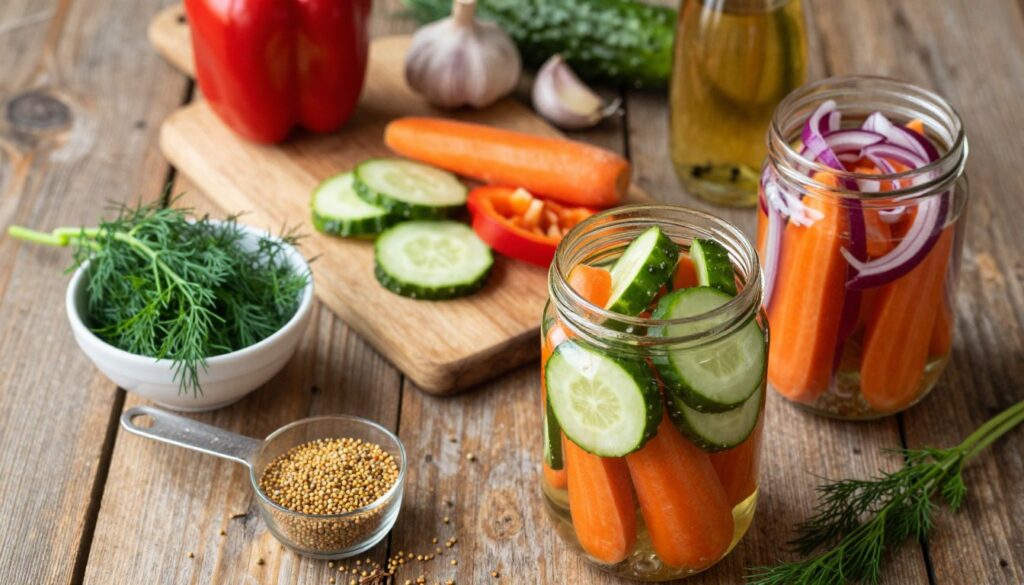
Cucumbers are common, but Homemade Pickles work with many vegetables as long as the pieces are firm and cut evenly. Choose vegetables that keep structure after sitting in brine. Softer vegetables can still work, but they’ll be more delicate and should be sliced thicker.
You can apply the same Homemade Pickles approach to sliced onions, radishes, jalapeños, or bell peppers. Keep flavors clean by limiting the number of strong spices in one jar. If you want multiple profiles, make two smaller jars instead of one “everything” jar.
Delicious Ways to Enjoy Easy Homemade Pickles
Homemade Pickles work as a high-contrast topping where foods need acidity or crunch. Add sliced pickles to sandwiches, burgers, or wraps to cut through rich sauces. Chop them and fold into tuna salad or chicken salad for texture. Add a few pieces to grain bowls for balance. If you’re planning a meal, browse main course recipes and use a jar of Homemade Pickles as the acidic side that sharpens the plate.
For snack boards, pair Homemade Pickles with cheese, olives, and crackers. For lighter bites, use them alongside appetizers and snacks to add crunch without extra cooking.
Final Thoughts
Homemade Pickles are a practical way to preserve vegetables in a vinegar brine and add acidity where meals need contrast. If you want a quick reference on what “pickling” means, see this overview of pickles, then use the technique tips above to improve texture and balance in your own jar.
To improve consistency, keep notes for each batch: cut size, spice mix, and when the flavor hits your preference. Homemade Pickles often taste sharper on day one and more rounded after a short rest. If a jar is too strong, dilute the brine slightly with cold water and let it sit again; if it’s bland, add a little extra salt or a fresh herb and give it more time.
If you want more condiment ideas, explore sauces and condiments and use Homemade Pickles as your baseline for building quick, fridge-friendly toppings.