

Easy Carbonara Recipe (Silky Sauce in 20 Minutes)
By Captain Cooking
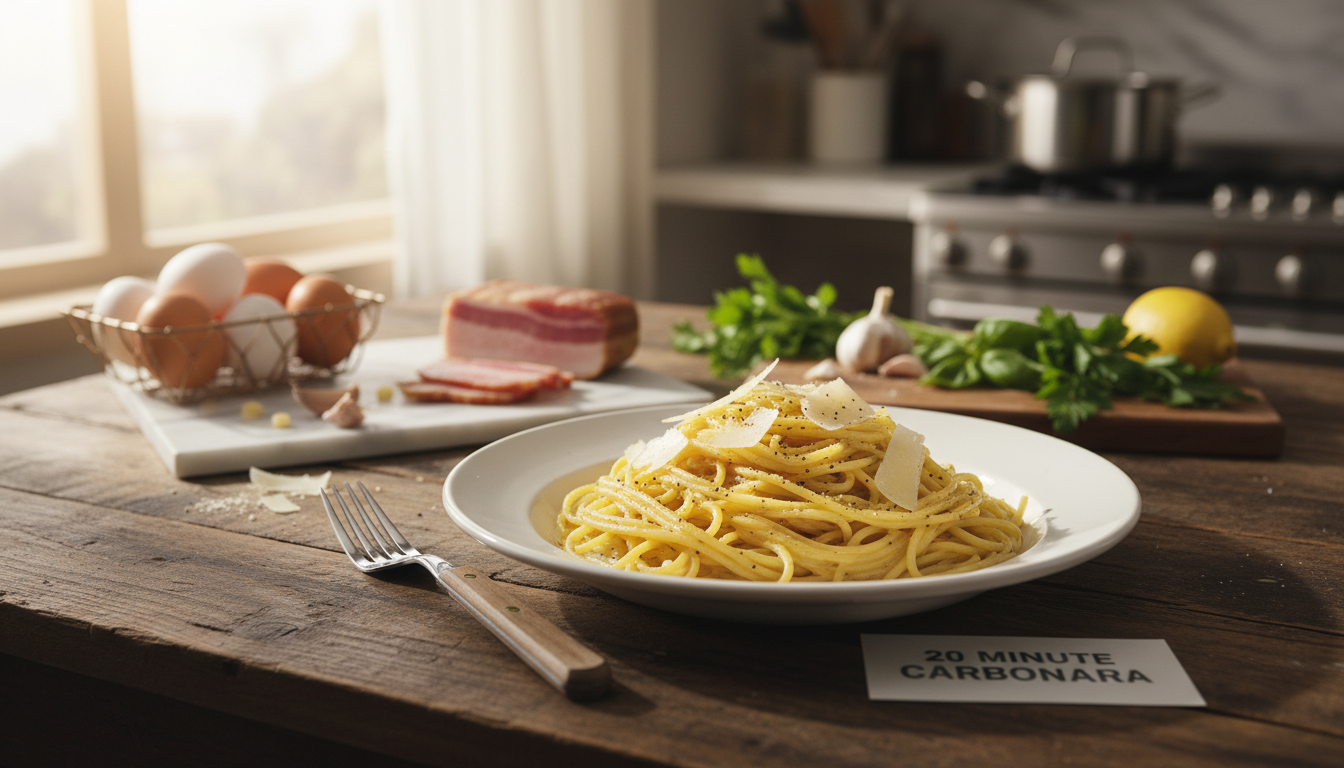
This Carbonara Recipe focuses on technique, not shortcuts. Traditional carbonara gets its smooth texture from eggs, hard cheese, and starchy pasta water—not cream.
The difference between glossy sauce and scrambled eggs comes down to timing, temperature, and how you emulsify. Once you understand those three, carbonara becomes repeatable instead of “luck.”
If you want more Italian-style ideas, browse our recipe collection for pastas, mains, and quick sauces.
Key Takeaways
Why This Carbonara Recipe Works in 20 Minutes
This Carbonara Recipe is fast because most of the “work” is emulsifying at the end. While the pasta cooks, you prep the egg-and-cheese base and crisp the pork so everything is ready to combine.
The sauce forms when hot pasta and a small amount of starchy water meet eggs and cheese at controlled heat. That’s why the order matters more than adding extra ingredients.
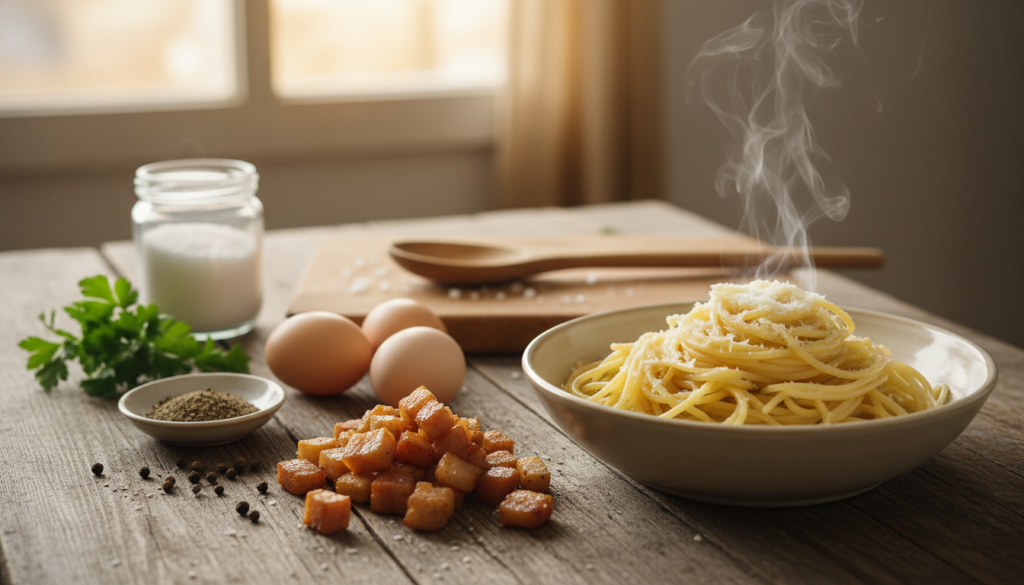
The Origins of Authentic Carbonara
Carbonara is strongly associated with Rome and the Lazio region. The classic method relies on cured pork (often guanciale), Pecorino Romano, eggs, and black pepper.
Because the ingredient list is short, small choices matter: how finely you grate the cheese, how hot the pasta is, and how you manage the fat from the pork. Those details are what make the Carbonara Recipe taste balanced instead of heavy.
The Secret Behind This Quick and Creamy Carbonara
Guanciale is traditional, but pancetta can still give the Carbonara Recipe the right fat-to-salt balance. If you use bacon, expect more smoke and a slightly sweeter finish, so keep the cheese and pepper sharp to compensate.
Whatever you choose, render it gently so the fat stays clean-tasting. Burnt bits can make the sauce taste bitter once everything is tossed together.
A useful rule:
“If the pan is too hot, the eggs set; if it’s too cool, the sauce turns heavy. Aim for warm carryover heat and constant tossing.”
This is why the final minute matters most in a Carbonara Recipe. You’re not “cooking” the eggs like an omelet; you’re thickening them gently so they cling to each strand.
Carbonara Recipe
This Carbonara Recipe uses a short ingredient list, so focus on the details you can control. Grate the cheese finely so it melts without clumps, and use freshly cracked black pepper for sharper aroma.
Salt is not a “set and forget” step here. The cured pork and Pecorino bring salt, so taste at the end and adjust only if needed.
Carbonara
Ingredients
- 2 large eggs
- 1/2 cup Pecorino Romano cheese grated
- 100 g pancetta or bacon diced
- 1/2 teaspoon black pepper
- Salt to taste
- 1/2 cup reserved pasta water as needed
Instructions
- Bring a pot of salted water to a boil and cook the spaghetti until al dente according to package instructions. Reserve 1/2 cup of pasta water, then drain.
- In a bowl, whisk together the eggs, grated Pecorino Romano cheese, and black pepper until well combined.
- In a pan over medium heat, cook the pancetta or bacon until crispy. Remove from heat.
- Add the cooked spaghetti to the pan with pancetta and toss to combine.
- Pour the egg and cheese mixture over the pasta and quickly toss to create a creamy sauce. Add a splash of reserved pasta water if needed for consistency.
- Serve immediately with extra cheese and black pepper on top.
Notes
- use high quality cheese
- do not scramble eggs
- add pasta water gradually
Step 1: Preparing Your Ingredients
Prep matters because carbonara doesn’t give you a long window at the end. Whisk the eggs until uniform, then fold in the grated cheese so the mixture looks thick and cohesive.
Keep the bowl close to the stove. When the pasta is ready, you want to move quickly so the residual heat helps the sauce turn silky instead of stodgy.
Step 2: Cooking the Pasta Perfectly
Al dente pasta is important in a Carbonara Recipe because it keeps structure when you toss hard. Overcooked noodles release too much starch too quickly and can make the sauce feel gluey.
Reserved pasta water is your control knob. It loosens the mixture, helps the cheese melt smoothly, and lets you build a thin coating that turns glossy as you toss.
Step 3: Preparing the Egg and Cheese Mixture
Think of this mixture as a sauce base, not a topping. Finely grated cheese blends more evenly with eggs, which reduces the chance of grainy texture once it hits hot pasta.
Add black pepper early so it blooms slightly in the warm mixture, then adjust again at the end. In a Carbonara Recipe, pepper is not decoration—it’s part of the balance.
Step 4: Cooking the Pancetta or Bacon
Cook the pork until the fat renders and the edges crisp. That rendered fat becomes part of the sauce, so treat it like a seasoning ingredient rather than “just grease.”
Once it’s crisp, pull the pan off high heat. Keeping the pan too hot is one of the fastest ways to break a Carbonara Recipe at the mixing stage.
Step 5: Combining Everything Together
Tossing first coats the pasta in rendered fat, which helps the sauce cling evenly. It also distributes heat so you don’t get one hot spot that sets the eggs.
If you’re new to this Carbonara Recipe, use a wide pan or a mixing bowl for more surface area and easier tossing.
When you add the egg mixture, keep the heat gentle and keep the pasta moving. Constant tossing turns the mixture into a creamy coating instead of curds.
If you see the sauce tightening too quickly, pause and add a small splash of pasta water to bring it back to a glossy texture.
Use reserved pasta water in small additions. You’re aiming for a thin, shiny coating that thickens slightly as it sits for a minute.
Common Mistakes to Avoid
The most common issue is overheating, which turns the egg mixture into small curds. Take the pan off direct heat before mixing, then rely on residual warmth and tossing.
Another issue is adding cheese too coarsely grated, which can clump and feel sandy. Fine grating and steady mixing help the Carbonara Recipe stay smooth.
Finally, avoid over-salting early. Taste after the pork and cheese are mixed through, then adjust carefully.
Mastering the Easy Carbonara Recipe
Once you can control heat and pasta water, you can fix the sauce in real time. Too thick? Add a small splash of water and toss until glossy. Too loose? Toss for another 20–30 seconds to tighten naturally.
This is also where you tailor texture. More tossing builds a thicker coating; less tossing keeps it lighter. That flexibility is what makes a Carbonara Recipe useful for different appetites.
If you want more consistency, keep two habits: always reserve pasta water, and always mix off direct heat. Those two alone prevent most failures.
For more weeknight-friendly ideas, check our main course recipes and rotate proteins and sauces across the week without repeating flavors.
If you enjoyed this Carbonara Recipe, try applying the same “emulsion thinking” to other dishes. Pasta water and controlled heat can improve many cheese-based sauces without adding extra dairy.
You can also explore our sauces & condiments section for ideas that pair with grilled meats, roasted vegetables, or simple pasta bowls.
Want a sauce option for a different mood? Try a smoky homemade BBQ sauce from our sauces section and use it on grilled chicken, roasted potatoes, or a quick sandwich.
Final Thoughts
This Carbonara Recipe is about clean ingredients and controlled mixing. Use the cured pork for fat and depth, the cheese for sharp saltiness, and pasta water to bring everything together into a glossy coating.
If you want to read more background on the dish, here’s a quick reference on carbonara. Then come back and focus on the practical part: mix off heat, toss constantly, and use pasta water gradually until the sauce looks smooth and shiny.