

Easy Corned Beef Hash Recipe: 7 Crispy Skillet Tips
By Captain Cooking

If you want a skillet breakfast that delivers crisp edges and rich, savory bites, this Corned Beef Hash Recipe is a reliable choice. The goal is simple: brown the potatoes well, warm the beef without drying it out, and build flavor with onions and seasoning.
This guide focuses on technique rather than repeating what’s already in the recipe card. You’ll learn how to control heat, prevent steaming, and get those browned bits that make hash taste better.
If you like practical, meal-prep-friendly proteins, you may also enjoy our shredded chicken recipe for quick lunches and dinners. For hash, all you need is a sturdy skillet, patience between stirs, and a few small adjustments that change the texture fast.
Key Takeaways
Why Corned Beef Hash Works for Breakfast
A Corned Beef Hash Recipe is built on two things most breakfasts need: steady energy and a fast cooking method. Potatoes provide structure and crispness, while corned beef adds savory depth without requiring long cook time. When you cook it in a single skillet, you also get concentrated browning that boosts flavor.
The History Behind This Classic Dish
Corned beef hash grew from practical cooking: people used cooked meat and potatoes to make a complete meal without waste. In the 19th century, home kitchens and boarding houses leaned on leftovers that could be diced, browned, and served quickly. The method also fits diner-style service because a skillet can handle multiple portions with consistent results.
Regional versions developed as cooks adjusted what they had on hand. Some add peppers for sweetness, while others keep it simple with onions and black pepper. No matter the variation, the core idea remains the same: cut evenly, brown well, and season carefully.
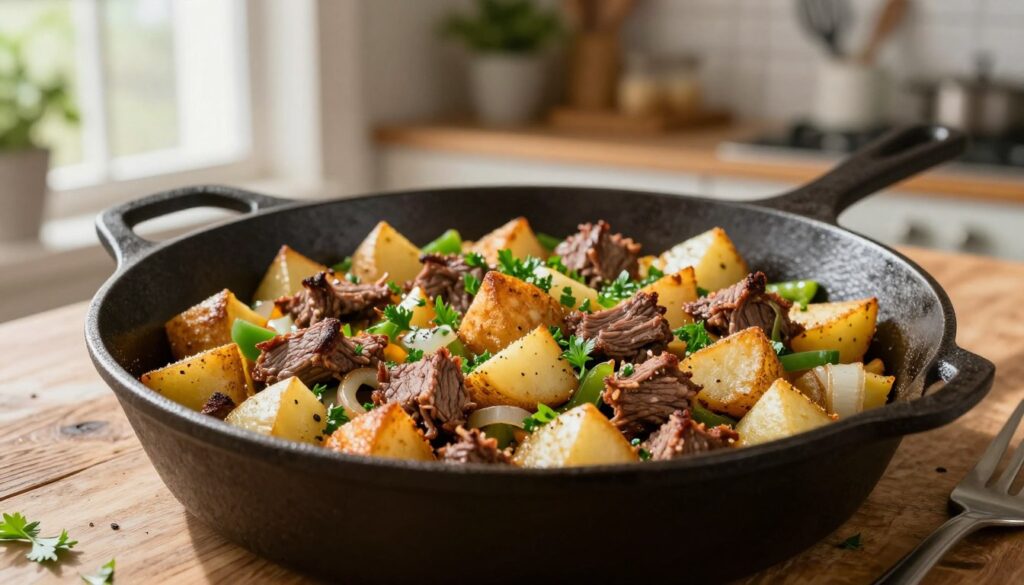
What Makes Homemade Better Than Store-Bought
Homemade corned beef hash is noticeably different from frozen or processed versions because you control moisture, browning, and seasoning. A good Corned Beef Hash Recipe depends on texture, and texture is hard to maintain when ingredients are pre-cooked and packaged.
Packaged hash often contains stabilizers and arrives with extra moisture. When you make a Corned Beef Hash Recipe at home, you can dry the potatoes, brown them properly, and keep the beef tender instead of overcooked. Using strong building blocks matters in many recipes, including our homemade chicken stock recipe, where a few technique choices make the final flavor cleaner and deeper.
Corned Beef Hash Recipe
Use the recipe card below for ingredients and steps. In the sections after the card, this Corned Beef Hash Recipe guide explains how to manage moisture, browning, and seasoning so the potatoes crisp and the beef stays tender. Small choices—like when you stir and when you salt—have a bigger impact than adding more ingredients.
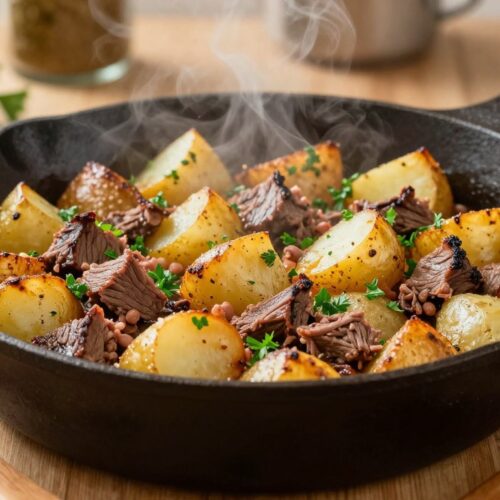
Corned Beef Hash
Ingredients
- 2 to 3 cups cooked corned beef diced
- 3 to 4 medium potatoes russet or Yukon gold, diced small
- 1 medium onion finely chopped
- 3 tbsp butter or cooking oil
- 1 tsp black pepper
- 1 tsp paprika
- 1/2 tsp garlic powder
- Salt to taste
- Fresh parsley or thyme for garnish
Instructions
- Prepare the potatoes:
- Cut potatoes into small uniform cubes (about 1/2 inch). Microwave them for 5 minutes to soften slightly.
- Prepare other ingredients:
- Dice the cooked corned beef into bite-sized pieces and finely chop the onion.
- Heat the skillet:
- Place a large cast-iron skillet over medium-high heat. Add butter or oil and let it get hot.
- Cook potatoes & onions:
- Add potatoes and onions to the skillet. Let them cook without stirring for 3–4 minutes until the bottom becomes crispy and golden.
- Add corned beef:
- Add diced corned beef. Stir gently and press everything down with a spatula.
- Finish cooking:
- Cook for another 8–10 minutes, stirring occasionally, until potatoes are crispy and golden.
- Season & serve:
- Add black pepper, paprika, garlic powder, and salt to taste. Garnish with fresh parsley or thyme and serve hot.
Notes
- Use a hot pan to get that crispy golden crust
- Don’t stir too often—leave it to caramelize
- Press the hash down for better crispiness
- Add a fried egg on top for a complete breakfast
Chef Secrets for Better Hash Texture
This Corned Beef Hash Recipe is simple, but the skillet can either crisp or soften your ingredients depending on timing. Focus on three goals: keep moisture low, keep surface contact high, and avoid over-salting before tasting.
Start with a properly heated skillet so the potatoes sear instead of sweat. If you add potatoes to a lukewarm pan, they release water and soften before they can brown. Preheating also helps onions caramelize faster, which improves the base flavor.
Stir less than you think you should. Browning needs uninterrupted contact with the pan, so give the hash a few minutes before flipping sections. If you move it constantly, you’ll stop the crust from forming and the potatoes will stay pale.
Press the hash gently with a spatula to increase contact with the hot surface. This is especially helpful if your diced pieces are uneven or if you’ve added vegetables that hold moisture. More contact equals more browning and a firmer bite.
Season near the end and taste first. Corned beef is cured, so salt levels vary by brand and batch. A quick taste after browning keeps the balance right without making the whole skillet too salty.
Once the technique is solid, you can change vegetables and seasoning without losing the crisp texture.
Flavor Variations to Try
For more color, add diced bell peppers, but sauté them first so they don’t add water to the potatoes. Sweet potatoes work too, but they brown faster because of their sugar, so keep the heat a bit lower. If you want heat, use jalapeño or a small pinch of chili flakes and taste before adding more.
If you add cheese, sprinkle it at the very end so it melts without trapping steam in the pan. A fried or poached egg also works well because the yolk coats the crisp potatoes without making them soggy. Keep the egg as a topping, not mixed in, to protect the crust.
Fresh herbs like chives or thyme are best added off the heat so they stay bright. For tang, a small swipe of Dijon on the plate or a few drops of hot sauce can sharpen the flavor without overpowering the beef. If you try mustard, start small and adjust after tasting.
What to Serve with Corned Beef Hash
Corned beef hash is filling on its own, so sides work best when they add contrast. Think crisp, acidic, or fresh elements that cut through the salty, browned base. This keeps the whole plate balanced.
A fried or poached egg is the most common pairing because it adds richness without changing the hash texture. If you like a runny yolk, serve the egg on top so you can control how much mixes into each bite.
Toast, English muffins, or biscuits help scoop up the crisp bits from the plate. Fresh fruit works too, especially citrus, because it brightens the meal. For a crunchy, tangy contrast, try a small serving of our homemade pickles recipe on the side.
If you prefer something lighter, a simple green salad with vinaigrette can work as a side. Keep it sharp and not sweet, since the hash already brings plenty of richness.
How to Store and Reheat Corned Beef Hash
Leftovers are common with a Corned Beef Hash Recipe, and the good news is the skillet reheat can bring back crisp edges. The main rule is to cool it quickly, store it sealed, and reheat with dry heat rather than steam.
Let the hash cool, then store it in an airtight container in the refrigerator for up to four days. When reheating, spread it in a thin layer in a skillet over medium heat and let it sit so the bottom browns again. If it looks dry, add a small amount of fat to the pan rather than adding water.
Microwaving is faster, but it softens the potato crust because it heats with trapped moisture. If you must microwave, use a lower power setting and finish for a minute in a hot skillet to restore the surface texture.
You can freeze corned beef hash for up to two months. Thaw it overnight in the refrigerator, then reheat in a skillet so the potatoes can brown again. Avoid reheating from frozen, because the outside warms before the center is hot.
If you liked this Corned Beef Hash Recipe, explore more breakfast ideas on Captain Cooking and focus on the same core skills: browning, timing, and balanced seasoning. Once you’re comfortable with skillet cooking, you can adapt the method to other potatoes, vegetables, and proteins without losing the crisp finish.
Final Thoughts
A good Corned Beef Hash Recipe doesn’t require complicated steps, but it does reward patience in the pan. Dry ingredients, steady heat, and fewer stirs give you crisp potatoes and well-browned edges. Once you get that texture right, the rest is simple.
Use leftovers confidently, but keep the pieces even so they heat at the same pace. If you scale up, cook in batches rather than crowding one pan. Crowding traps steam, and steam is the fastest way to lose crispness.
Reheating can be excellent when you use a skillet and let the bottom brown again. Pair the hash with eggs, toast, fruit, or something tangy to keep the plate balanced. With the technique in place, this Corned Beef Hash Recipe becomes easy to repeat.
If you want to customize, change one variable at a time. Swap potato types, add a vegetable, or adjust spice, then note how it affects moisture and browning. That approach helps you keep the crisp base while still making it yours.
Understanding what corned beef is (a cured, seasoned beef product) explains why seasoning should be adjusted at the end. Once you apply that principle, a Corned Beef Hash Recipe becomes predictable: crisp potatoes, warmed beef, and balanced salt. Keep notes on your preferred browning level and you’ll get consistent results each time.