

Chocolate Ganache Recipe: Easy Step-by-Step Guide
By Captain Cooking

If you’ve ever searched for a dependable Chocolate Ganache Recipe, this guide breaks it down into clear, repeatable technique. Ganache is simply chocolate emulsified with warm cream, and the method is easier than it looks once you understand ratios and temperature control. For background, you can read the classic definition of chocolate ganache, then come back here for the practical details that actually prevent common mistakes.
This Chocolate Ganache Recipe is designed to help you choose the right chocolate, heat cream correctly, and adjust texture on purpose—so you can glaze a cake, frost cupcakes, or fill pastries without guessing. If you’re planning a full dessert build, you may also like our Sweets & Desserts recipes, plus simple pairings like Sauces & Condiments for finishing touches.
Key Takeaways
What Is Chocolate Ganache and Why You’ll Love This Recipe
Chocolate ganache is an emulsion of melted chocolate and warm cream. When you combine them the right way, the mixture turns glossy and smooth instead of oily or grainy. That shine is what makes desserts look finished without extra decoration.
You can use one Chocolate Ganache Recipe in multiple ways by changing the ratio and letting it cool to the texture you need. It can pour like a glaze, spread like frosting, or sit thick as a filling. The reliability comes from using weight, gentle heat, and patient mixing.
This Chocolate Ganache Recipe focuses on control, not luck. You’ll learn what “warm” cream should look like, why small chocolate pieces melt more evenly, and how to fix ganache if it separates. Once those basics are clear, ganache becomes a repeatable technique you can apply to many desserts.
Understanding the Perfect Chocolate-to-Cream Ratio
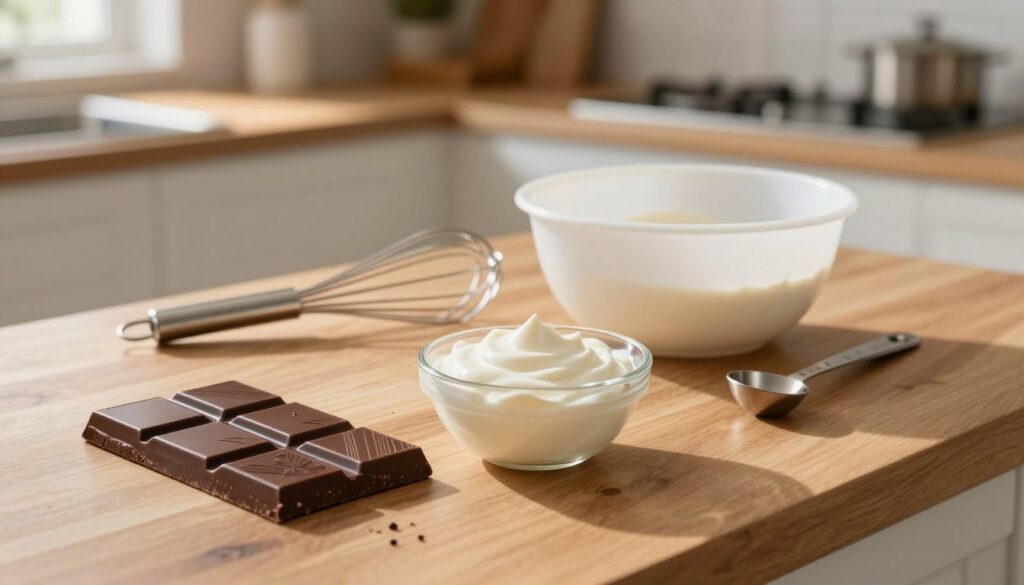
In any Chocolate Ganache Recipe, the ratio decides whether your ganache pours, spreads, or sets firm. A common starting point for semi-sweet chocolate is equal parts chocolate and cream by weight. From there, you can adjust based on the chocolate type and how you plan to use it.
If your goal is a shiny glaze, you want a looser ganache that still looks smooth when it settles. For frosting or filling, you’ll usually want more chocolate so it sets thicker and holds definition. The key is making changes with weight, not volume, so results stay consistent.
Using a kitchen scale is one of the easiest upgrades you can make for a Chocolate Ganache Recipe, because chocolate and cream behave differently when measured by volume. Semi-sweet chocolate (about 35–55% cacao) is a forgiving baseline that typically works well at equal weight with cream for a balanced, glossy ganache. Milk chocolate is softer and sweeter, so it usually needs a higher chocolate proportion to prevent a loose set. White chocolate contains cocoa butter but no cocoa solids, so it often needs the highest chocolate ratio to stay stable and thick.
Ratios change because chocolates have different amounts of cocoa solids, cocoa butter, and added dairy. More cocoa butter can make ganache feel softer at room temperature, while higher cocoa solids can make it set firmer. When you test a new chocolate, start with a small batch so you can fine-tune the texture before you glaze a whole cake.
Choosing the Right Chocolate for Your Ganache
Chocolate quality shows up fast in a Chocolate Ganache Recipe because there are so few ingredients. Choose chocolate you’d enjoy eating on its own, with a cacao percentage that matches your sweetness preference. If you use chips, pick a higher-quality brand—some chips are formulated to hold shape, which can slow melting and affect smoothness.
Cream matters just as much as chocolate. A higher-fat cream emulsifies more reliably and helps ganache set with a clean, even texture. Lower-fat dairy can make ganache look dull or separate, especially if the chocolate is very dark.
If you’re new to ganache, start with semi-sweet or bittersweet chocolate rather than extra-dark. They melt more predictably and are less likely to seize when the cream temperature is slightly off. Once you’re confident, you can experiment with higher cacao chocolate for a deeper finish.
These choices remove most guesswork, so your Chocolate Ganache Recipe turns out smooth more often—even on the first try.
Chocolate Ganache Recipe: Simple Two-Ingredient Method

Chocolate Ganache
Ingredients
- 8 oz 225g semi-sweet chocolate (chopped or chips)
- 1 cup 240ml heavy whipping cream (36% fat)
- Optional for flavor variations:
- 1 tsp vanilla extract
- 1 tbsp butter for extra shine
Instructions
Method 1 – Pour Over Technique (Recommended)
- Chop the chocolate into small, even pieces and place in a heatproof bowl.
- Heat the heavy cream in a saucepan until it just begins to simmer (do not boil).
- Pour the hot cream over the chocolate.
- Let it sit for 5 minutes without stirring.
- Stir gently from the center outward until smooth and glossy.
Method 2 – Double Boiler Method
- Add chocolate and cream to a heatproof bowl.
- Place the bowl over a saucepan with simmering water (double boiler).
- Stir gently until chocolate is melted and mixture is smooth.
Notes
- Use high-quality chocolate for best flavor and texture
- Chop chocolate evenly so it melts uniformly
- Never let water touch the chocolate (it will seize)
- Use a kitchen scale for accurate ratios
How to Use Chocolate Ganache
A Chocolate Ganache Recipe is most useful when you treat it like a texture you can tune. Warm ganache flows and self-levels, while cooler ganache spreads thicker and stays where you put it. If you’re building a dessert table, pair it with easy bakes from our Recipes section so you can use one batch in more than one way.
Ganache Consistency Guide
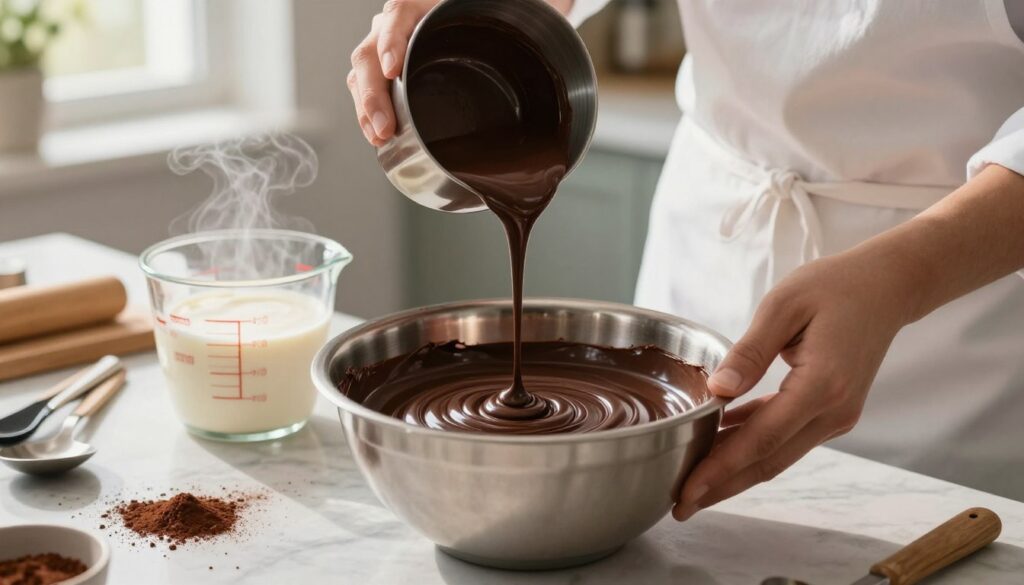
Cooling is the “hidden ingredient” in any Chocolate Ganache Recipe. When it’s freshly made and still warm, it stays fluid and works best as a glaze because it spreads into a smooth, shiny layer. As it cools, it thickens into a spreadable texture that’s easier to frost with and less likely to drip. If you chill it further and then whip, it becomes lighter and holds air, which is useful for piping or filling when you want a softer bite.
Troubleshooting Chocolate Ganache
Too thick: Warm it briefly, then add a small splash of warm cream and stir from the center outward.
Too thin: Let it cool longer, or add a little more melted chocolate to increase structure.
Grainy: This often comes from overheating or starting to seize; gently warm and whisk until it smooths out.
Separated or oily: Warm it very gently and whisk (or blend) to re-emulsify; avoid high heat, which can make the split worse.
How to Store Chocolate Ganache
Final Thoughts
A dependable Chocolate Ganache Recipe comes down to three things: the right ratio, gentle heat, and steady mixing. When those are in place, ganache turns glossy and smooth with very little effort. It’s a simple technique, but it rewards precision.
Whether you’re glazing a cake, frosting cupcakes, or making a thick filling, this Chocolate Ganache Recipe gives you a repeatable base you can adjust. Start with one chocolate you trust, measure by weight, and make small changes so you learn what each adjustment does. That’s the fastest path to consistent results.
After you’ve made it a few times, you’ll be able to read the texture as it cools and choose the best moment to pour, spread, or whip. Keep this Chocolate Ganache Recipe as your baseline, then experiment with different chocolates and ratios to match the dessert you’re building.