

Delicious Beef Ribs Recipe: Tender, Flavorful, and Easy to Make
By Captain Cooking

This Beef Ribs Recipe is built for dependable results: a simple seasoning approach, steady low heat, and a finish that keeps the meat juicy. Beef ribs taste fuller than many other cuts because the meat sits close to bone and carries more connective tissue and fat. When you cook them gently, that collagen softens and turns the bite tender instead of tough.
You don’t need a smoker or specialty tools to get great ribs. What matters is choosing the right rack, keeping the temperature consistent, and knowing when to wrap, rest, and sauce. Use this guide to get ribs that slice cleanly, hold moisture, and still have a flavorful exterior.
Key Takeaways
Why Beef Ribs Are the Perfect Choice for Your Next Meal
Beef ribs bring a deep beef flavor because the meat sits close to bone and often carries more marbling than many quick-cooking cuts. When cooked slowly, the connective tissue softens, which is what makes the bite tender instead of chewy.
They also work well for gatherings because one rack serves multiple people and the cook is mostly hands-off once the heat is stable. If you plan your timing and let the ribs rest before slicing, you get cleaner portions and better moisture.
Beef ribs are versatile: bake them in the oven, finish them on a grill, or use a smoker if you have one. The same base approach works across methods, as long as you avoid rushing the cook with high heat.
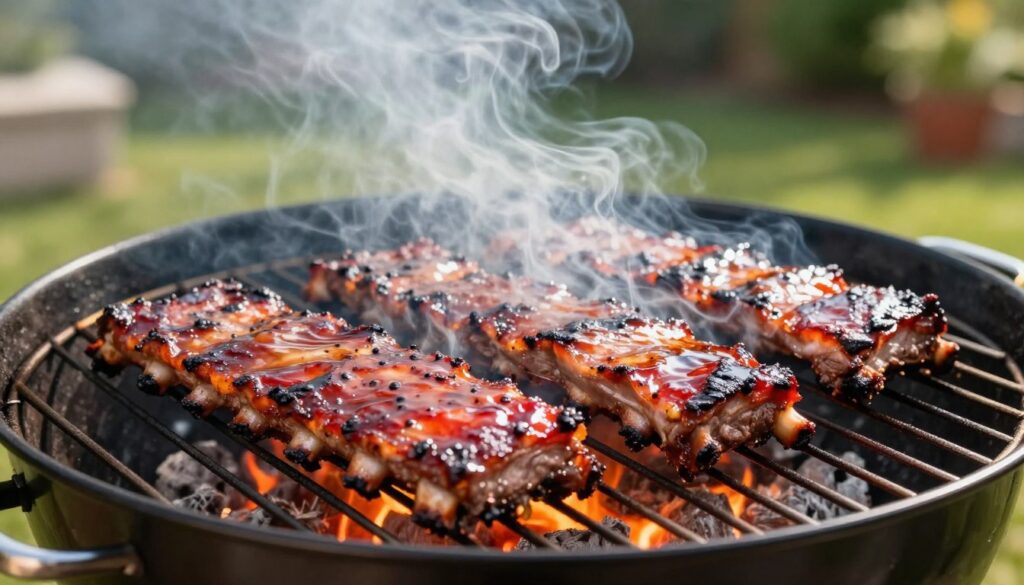
If you like a smoky profile, a charcoal grill or smoker helps, but you can still build a strong crust in the oven. The key is dry surface seasoning and enough time for the exterior to set before adding any glaze.
Eating ribs is naturally hands-on, which makes it a good fit for casual meals and outdoor cooks. If you want a cleaner plate, slice between bones after resting so the meat stays in place.
From a nutrition standpoint, beef ribs provide protein and key minerals like iron, but they’re also rich, so portion planning helps. Pairing them with lighter sides and something acidic (like a vinegar-based slaw) balances the plate.
Beef ribs work well when you treat them like a low-and-slow cut: season thoughtfully, cook gently, and rest before slicing. That’s the difference between ribs that shred into dry strands and ribs that stay juicy on the bone.
Beef Ribs Recipe
A reliable Beef Ribs Recipe starts at the store. The rack you buy affects cooking time, fat rendering, and how the meat feels when you bite into it. Before you season anything, decide whether you want long bones with meat between them (back ribs) or thicker, meatier pieces (short ribs). Matching the cut to your cooking method makes everything easier.

Beef Ribs
Ingredients
- 3 to 4 pounds beef ribs back ribs or short ribs
- 2 tsp salt
- 1 tsp black pepper
- 1 tsp garlic powder
- 1 tsp paprika
- 1 tbsp Worcestershire sauce
- 2 tbsp brown sugar
- 1 cup apple juice or beef broth
- 1/2 cup BBQ sauce optional, for glazing
Instructions
- Preheat oven or smoker to 225°F (107°C).
- Pat ribs dry and remove any excess membrane if needed.
- Mix salt, pepper, garlic powder, paprika, and brown sugar to create a dry rub.
- Rub seasoning evenly over all sides of the ribs.
- Place ribs on a baking tray or grill rack bone-side down.
- Cook low and slow for 5–6 hours, spritzing with apple juice every hour.
- During the last 30 minutes, brush ribs with BBQ sauce (optional).
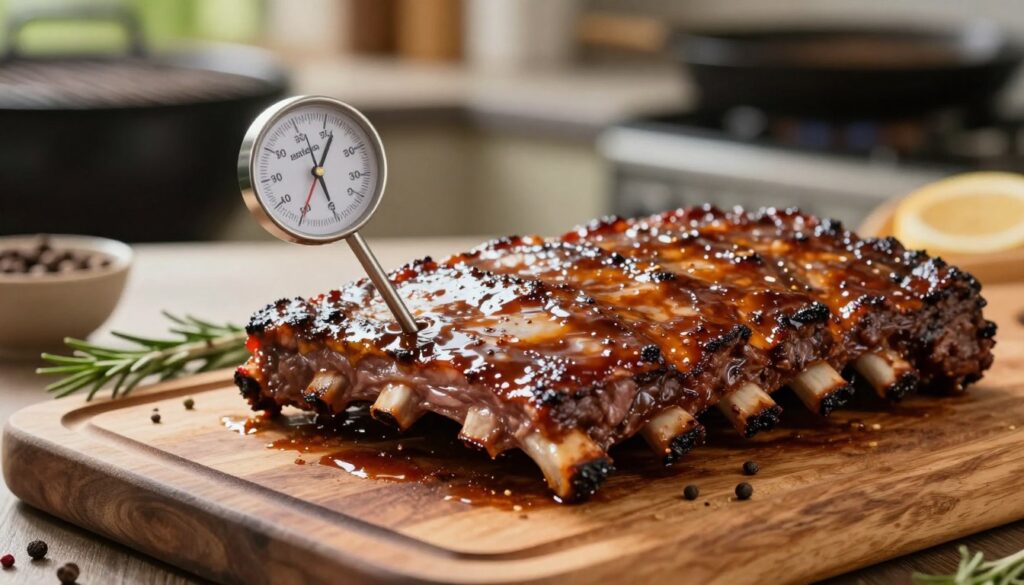
- Ribs are ready when internal temperature reaches 203–205°F and meat pulls away from the bone.
- Rest for 10 minutes before serving.
Notes
- Low temperature is the key to tender ribs
- Don’t rush the cooking process
- Wrapping in foil halfway keeps moisture inside
- Let ribs rest before cutting for best texture
Selecting the Right Cut of Beef Ribs
The cut you choose changes how the ribs cook and how they serve. Back ribs come from the upper rib area and usually have longer bones with meat tucked between them. They respond well to low-and-slow cooking because that time helps soften connective tissue and render fat without drying the surface.
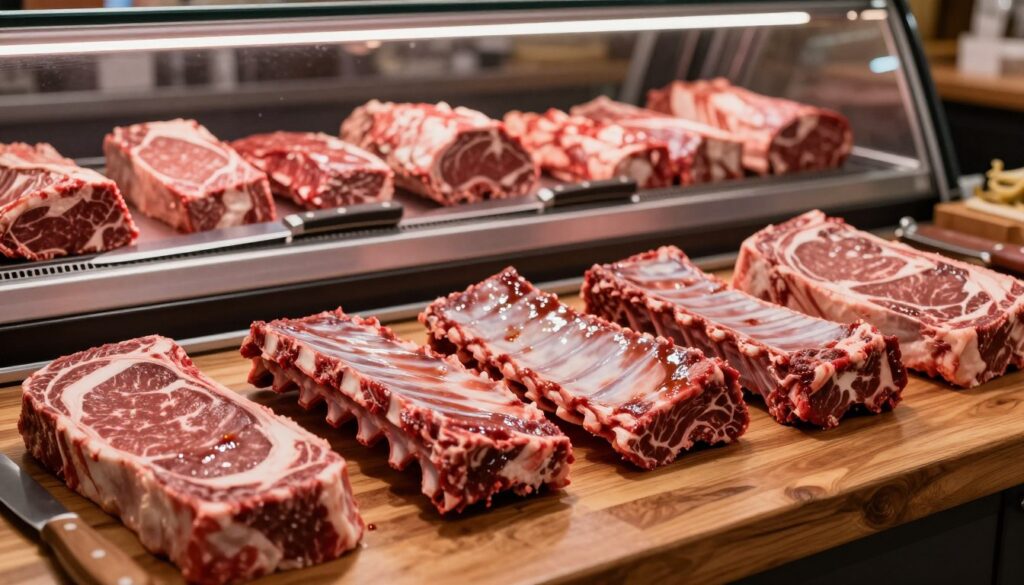
Short ribs are cut from the lower rib area and tend to be thicker and meatier. They’re great for braising or slow roasting because they have more collagen to soften over time. Depending on your store, short ribs may be cut in three common styles:
Look for deep red meat with visible marbling and avoid racks with a thick, hard fat cap that won’t render easily. If you can, choose ribs with fairly even thickness so they finish at the same time. If you’re cooking for a group, ask your butcher to help match racks by size so serving is more predictable.
Chef Secrets for the Perfect Beef Ribs Recipe
Great ribs come from patience and control, not constant flipping or high heat. When the ribs cook slowly, collagen softens and fat renders gradually, which keeps the meat moist. If you rush the cook, the exterior dries out while the interior stays tight and chewy.
Keeping your cooking temperature low is essential. High heat can tighten proteins quickly and push moisture out, especially on back ribs. Aim for steady heat (around 225°F if you’re smoking or low-roasting) and resist opening the lid or oven too often because temperature swings slow the cook.
Resting matters as much as cooking. When the ribs come off heat, the juices are moving; giving them time to settle helps the meat stay moist when you slice. If you cut too early, you’ll often see juice run out onto the board instead of staying in the ribs.
If your ribs look dry on the surface before they feel tender, wrapping can help. Wrap partway through with a small splash of broth or apple juice to protect moisture, then unwrap near the end to firm up the exterior. If the ribs are tender but the outside is pale, finish uncovered to dry the surface slightly before glazing.
Flavor Variations to Try
Beef ribs adapt well because the base cook is neutral: steady heat plus a balanced rub. Change one element at a time (sweetness, heat, smoke, or acidity) so you can repeat what you like.
For a classic BBQ direction, lean into paprika, garlic, onion, and a measured amount of brown sugar so the rub doesn’t burn at higher finishing heat.
If you prefer heat, add chili powder or cayenne, but keep salt steady so the ribs don’t taste overly sharp.
For a sweeter finish, brush on honey or a maple glaze late so it sets without turning bitter.
For a different profile, try a Korean-inspired soy and garlic glaze or a mustard-forward sauce, and keep it for the final stage so the sugars don’t scorch.
Once you have your timing down, you can rotate flavor styles without changing the core method. That’s one reason this Beef Ribs Recipe stays useful even after you’ve cooked it a few times.
What to Serve with Beef Ribs
Beef ribs are rich, so the best sides add contrast. Aim for at least one starchy side for balance and one bright or crunchy side to cut through the fat.
Some great side options include:
For a sharper balance, add a quick pickled side or a simple salad with vinegar. If you want another hearty dinner idea, browse our recipe collection for more mains and sides.
How to Store and Reheat Beef Ribs
Let ribs cool, then store them sealed so the surface doesn’t dry out. Keeping the meat protected from air is the easiest way to preserve texture and flavor for leftovers.
For reheating, use gentle heat and cover the ribs so steam helps warm the meat without drying it. A small splash of broth, water, or sauce in the pan helps keep the ribs juicy.
If you want to refresh the exterior after reheating, uncover for a short final burst of heat so the surface firms up again. Keep sauces for the end so the ribs don’t taste boiled.
For longer storage, freeze the ribs well-wrapped to limit freezer burn, then thaw in the fridge before reheating. This keeps the texture closer to freshly cooked ribs.
If you enjoyed this recipe, you might also like other homemade dishes on Captain Cooking such as chicken recipes, breakfast ideas, and easy dinner meals.
Final Thoughts
You now have a Beef Ribs Recipe you can repeat with confidence: choose the right cut, keep heat steady, and give the ribs time to soften. Small choices—like when you sauce, whether you wrap, and how long you rest—make a noticeable difference on the plate.
If your ribs ever come out tough, it usually means they needed more time at low heat, not more heat. If they come out dry, it often points to temperature swings, cooking uncovered too long in a dry oven, or saucing too early. Adjust one variable next time and you’ll dial it in quickly.
This style of cooking is forgiving once you understand the goal: render fat slowly and soften collagen without drying the surface. Use the method in the recipe card as your baseline, then apply the cut and timing tips above to match your oven, grill, or smoker.
Once you’re comfortable, experiment with rubs and sauces, but keep your process consistent so you can compare results. A small notebook note—cut type, starting weight, cooking method, and whether you wrapped—helps you repeat your best batch.
If you’re serving guests, remember that ribs are easier to portion after a short rest and a clean slice between bones. For food safety guidance on cooking temperatures, you can reference the USDA resource here: safe temperature chart.
Your beef ribs recipe can change based on the cut you buy and the heat source you use. Keep the fundamentals steady, and you’ll get consistent results.
Now it’s your turn: cook a rack, take a quick note on what cut you used, and adjust one variable next time (rub, wrap, or finish). If you tried a different flavor direction, share what you changed so others can learn from it too.
With the cut, timing, and temperature under control, this Beef Ribs Recipe becomes an easy repeat for weekends and group meals.