

Chicken Fried Steak Recipe: Easy Step-by-Step Guide
By Captain Cooking

If you want a reliable Chicken Fried Steak Recipe, focus on two things: a dry surface on the steak and steady oil temperature. Those two details decide whether the crust turns crisp or turns soft.
This guide keeps it practical and technique-first. You’ll learn how to build a coating that grips, how to fry without burning the flour, and how to make gravy that stays smooth instead of lumpy.
The “double dredge” matters because it creates layers: flour sticks to the meat, the wet dip bonds to the flour, and the final flour coat forms a thicker shell. That shell protects the steak so it stays tender while the outside browns evenly.
You don’t need special tools—just shallow bowls, a skillet, and a thermometer (even an inexpensive one). Once you understand the cues (sizzle level, color, and how the coating looks when it sets), your results become consistent.
Key Takeaways
What Is Chicken Fried Steak and Why You’ll Love It
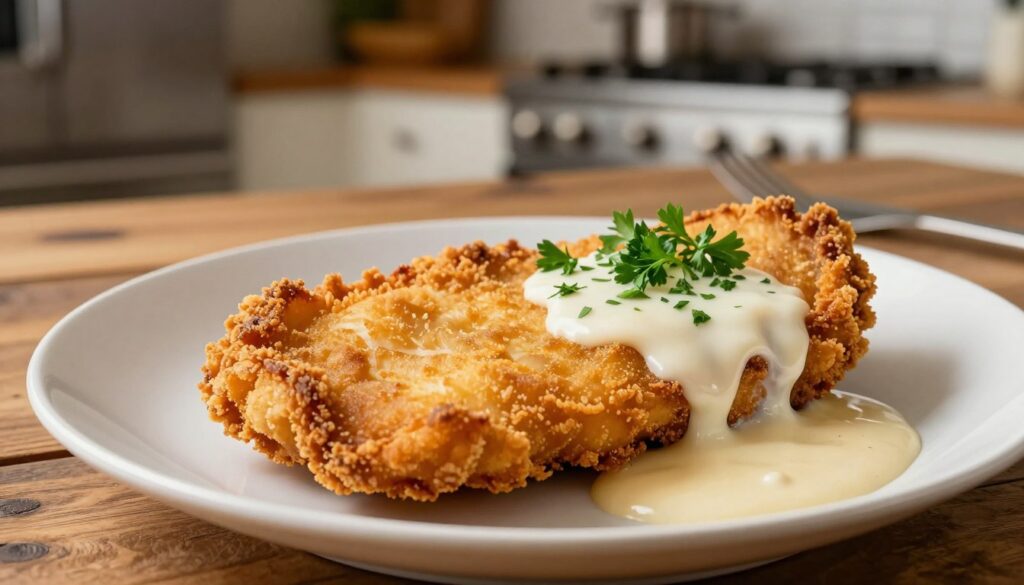
Chicken fried steak is beef cooked with the same bread-and-fry method used for fried chicken. The name is about the technique: a seasoned coating that turns golden and crisp in hot oil. When the coating sets quickly, it protects the meat from drying out. That’s why a good Chicken Fried Steak Recipe tastes tender even though it fries fast.
The idea is related to schnitzel-style breaded cutlets, which also rely on a dry surface and hot fat to crisp the coating. In the U.S., chicken fried steak is often served with milk gravy, so the crust has to be sturdy. That’s why the dredge and the oil temperature matter more than any single spice. If you can control those, you can repeat this Chicken Fried Steak Recipe on any busy day.
Best Cut of Beef for This Recipe
The best cuts for a Chicken Fried Steak Recipe are thin, quick-cooking, and easy to tenderize. You want beef that can take a firm press in the flour without tearing. If the steak is too thick, the crust can brown before the meat is tender. If it’s too thin, it can overcook before the coating turns evenly golden.
“The secret to great chicken fried steak is simple: tender beef, a coating that grips, and oil that stays at the right heat.”
Cube steak is the easiest win for a Chicken Fried Steak Recipe because it’s already run through a tenderizer. That tenderizing helps the steak cook evenly and prevents chewy edges. If you’re using round or sirloin tip, take a minute to pound it to an even thickness. Even thickness is what keeps the crust and the steak finishing at the same time.
Thickness matters because flour browns fast. Aim for a cutlet that’s thin enough to cook through quickly, but not so thin that it dries out. If you pound the meat, cover it with plastic wrap so it doesn’t tear and so cleanup is easy. A gentle, even pound is better than heavy hits that create holes and make the coating slip.
Chicken Fried Steak Recipe
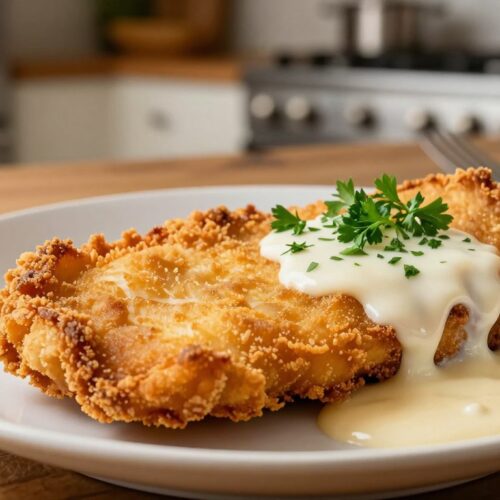
This Chicken Fried Steak Recipe is all about repeatable technique: dry the meat, build a sturdy coating, and fry at a controlled temperature. The goal is a crust that sets quickly, turns golden without scorching, and stays crisp long enough to handle gravy. You’ll get the best results when you treat the dredge like a “press on” step instead of a quick dusting. Small details—like draining on a rack and letting the coating rest—make a noticeable difference.
Chicken Fried Steak
Ingredients
For the Steak
- 2 pounds beef cube steak about 4 pieces
- Salt and black pepper to taste
- Vegetable oil for frying
For the Coating
- 2 to 2¼ cups all-purpose flour
- 2 teaspoons baking powder
- 1 teaspoon baking soda
- 1 teaspoon black pepper
- ¾ teaspoon salt
- 2 cloves garlic minced
- 1½ cups buttermilk
- 1 large egg
- 1 tablespoon hot sauce
For the Gravy
- ¼ cup all-purpose flour
- 4 cups whole milk
- ¼ cup reserved frying oil or butter
- Salt and black pepper to taste
- Optional: fresh thyme or chicken broth
Instructions
Prepare the steaks
- Pound cube steaks to about ¼-inch thickness and season with salt and pepper.
Prepare dredging station
- In one bowl, mix flour, baking powder, baking soda, garlic, salt, and pepper.
- In another bowl, whisk buttermilk, egg, and hot sauce.
Coat the steaks (double dredge)
- Dip steak in flour → then buttermilk → then back into flour. Press gently so coating sticks.
Heat oil
- Heat about 1 inch of oil in a skillet to 325–375°F (medium heat).
Fry steaks
- Fry each steak 3–5 minutes per side until golden brown and crispy.
- Remove and place on a wire rack.
Keep warm
- Keep fried steaks warm in a 200°F oven.
Make the gravy
- In the same pan, keep ¼ cup oil + brown bits.
- Add flour and cook 2–3 minutes.
- Slowly whisk in milk and cook until thick (6–7 minutes).
- Season with salt & pepper.
Serve
- Serve hot chicken fried steak topped with creamy gravy.
Notes
- For extra crispy coating, make sure to double dredge the steaks and press the flour firmly so it sticks well
- Let the coated steaks rest 5–10 minutes before frying to help the crust stay intact
- Keep oil temperature between 325–375°F (165–190°C) for even frying without burning
- Don’t overcrowd the pan — fry in batches for the best crispy texture
- If the gravy gets too thick, add a splash of milk to thin it out
- You can add a pinch of cayenne pepper or paprika for a little heat and extra flavor
Step-by-Step Instructions
Preparing Your Steaks
Preparing your steaks correctly keeps the coating from sliding off later. Pound cube steaks gently so the thickness is even from edge to edge, then season lightly so flavor reaches the meat (not just the crust). If the surface is wet, the flour turns pasty instead of dry and grippy. That’s why this Chicken Fried Steak Recipe starts with a dry pat-down.
Set up two shallow bowls so you can move quickly and keep one hand mostly dry. The flour bowl should be well mixed so salt and spices don’t clump in one spot. The wet bowl should be whisked until smooth so it coats evenly instead of streaking. A smooth dip makes the second flour layer form a consistent shell.
Pat the steaks dry, then dredge in flour, dip in the buttermilk mixture, and return to flour for the second coat. Press the flour in with your fingertips—think “attach,” not “dust.” After coating, let the steaks rest on a rack for a few minutes so the flour hydrates and locks in place. That short rest helps prevent bare spots when frying this Chicken Fried Steak Recipe.
Frying Your Steaks
Heat about 1 inch of oil in a cast-iron skillet and keep it in the 325–375°F range. If the oil is too cool, the coating absorbs oil and turns heavy; if it’s too hot, the flour can darken before the steak is done. A thermometer helps, but you can also watch for steady, active bubbling around the edges (not violent splattering). For basic food-safety temperature guidance, see USDA’s recommended minimum internal temperatures: Safe Temperature Chart.
Fry in batches so the oil temperature doesn’t crash when the steaks go in. When the first side is set and golden, it will release more easily—forcing a flip too early can tear the coating. Turn once, then let the second side finish without moving the steak around. Less movement helps the crust stay intact in this Chicken Fried Steak Recipe.
Drain on a wire rack rather than paper towels so steam can escape. Steam trapped underneath softens the crust, especially once gravy is added. Keep finished steaks warm in a low oven while you make the gravy, and avoid covering them. Airflow is what preserves crispness.
Making the Gravy
Pour off most of the oil, but keep the browned bits in the pan—they’re concentrated flavor. When you whisk flour into the fat, you’re building a roux that thickens the gravy and removes raw flour taste. Stir continuously so nothing scorches on the bottom of the skillet. A steady whisk now prevents lumps later.
Add garlic and thyme only after the roux starts smelling toasty, so the aromatics don’t burn. Pour in milk gradually while whisking, and scrape the pan to release the browned bits into the sauce. If the gravy thickens too fast, whisk in a splash more milk to loosen it. Taste at the end—salt and pepper should support the steak rather than overpower it.
Serve the chicken fried steak hot, then spoon gravy over the top right before eating. If you want maximum crunch, add gravy to each plate instead of pouring it over every steak at once. That small change keeps the coating crisp longer. It’s a simple way to get the best texture from this Chicken Fried Steak Recipe.
Tips for Making the Perfect Crispy Coating and Creamy Gravy
The coating and gravy succeed or fail for predictable reasons. Most issues come from moisture, rushed dredging, or oil that drifts too hot or too cool. Instead of guessing, use cues: the coating should look dry and textured before it hits the pan, and the oil should bubble steadily without smoking. Once you lock those in, this Chicken Fried Steak Recipe becomes consistent.
How to Achieve a Crispy Golden Brown Crust
The double dredge works best when you commit to drying and pressing. Dry steaks give the first flour layer a clean surface to grab, which prevents slipping during the wet dip. When you press the second flour coat in, you’re creating contact points that crisp and lock together in the oil. That structure is what makes this Chicken Fried Steak Recipe hold up under gravy.
Oil temperature is the second half of the crust equation. When the oil is hot enough, the coating sets fast and turns crisp instead of soaking up fat. If you see pale coating with weak bubbling, let the oil recover before adding another steak. If the crust darkens too quickly, lower the heat slightly and fry in smaller batches.
Making the Best Milk Gravy
Serving Suggestions and Side Dishes
Sides work best when they either absorb gravy or cut through richness with crunch and acidity. Think about contrast: creamy + crisp, salty + fresh, hot + cool. If you’re serving a Chicken Fried Steak Recipe for dinner, warm sides also help keep the steak from cooling too quickly. Build the plate so every bite stays balanced.
Mashed potatoes, green beans, and corn on the cob pair well because they match the gravy and keep the meal grounded. Biscuits or dinner rolls are useful when you want something to soak up extra sauce. If you want a sharper contrast, add a vinegar-forward slaw or quick-pickled onions. That brightness keeps the Chicken Fried Steak Recipe from tasting heavy.
For a simpler plate, roasted vegetables add texture without competing with the gravy. A basic garden salad with a tangy dressing also helps reset your palate between bites. If you like planning ahead, pair this with your own mashed potatoes so the meal feels complete without extra work.
A good plate is built the same way as the steak: with attention to texture and timing. Keep hot sides hot, keep crisp sides crisp, and add gravy at the last minute. If you’re using cast iron often, a quick refresher on care helps it last: cast-iron skillet care. Small habits like that make every Chicken Fried Steak Recipe easier next time.
Final Thoughts
You now have a Chicken Fried Steak Recipe that focuses on what actually drives results: dry steak, a pressed-in dredge, and oil that stays in range. If you want background on the dish’s name and history, this overview is a helpful reference: chicken fried steak. Use the technique notes above as your checklist, and the rest becomes routine.
If your first batch isn’t ideal, troubleshoot one variable at a time. Pale crust usually means oil that’s too cool or a coating that went into the pan still wet. Dark crust with underdone steak usually points to oil that’s too hot or steaks that were too thick. Those fixes are straightforward once you know what to look for.
Seasoning is the quiet difference between “fine” and “memorable.” Lightly season the meat before dredging, then rely on the flour mix to carry most of the flavor. Keep the gravy balanced so it complements the steak rather than masking it. When those parts work together, the Chicken Fried Steak Recipe tastes structured and consistent.
Go into the kitchen with a simple plan: prep the dredge, heat the oil, fry in batches, then finish the gravy. Once you’ve done it once, you’ll recognize the cues that matter most. Save this Chicken Fried Steak Recipe and treat it like a method you can repeat, not a one-time project. The payoff is control—over crispness, doneness, and gravy texture.