

Peach Cobbler Recipe: 7 Secrets to a Perfect Homemade Dessert
By Captain Cooking
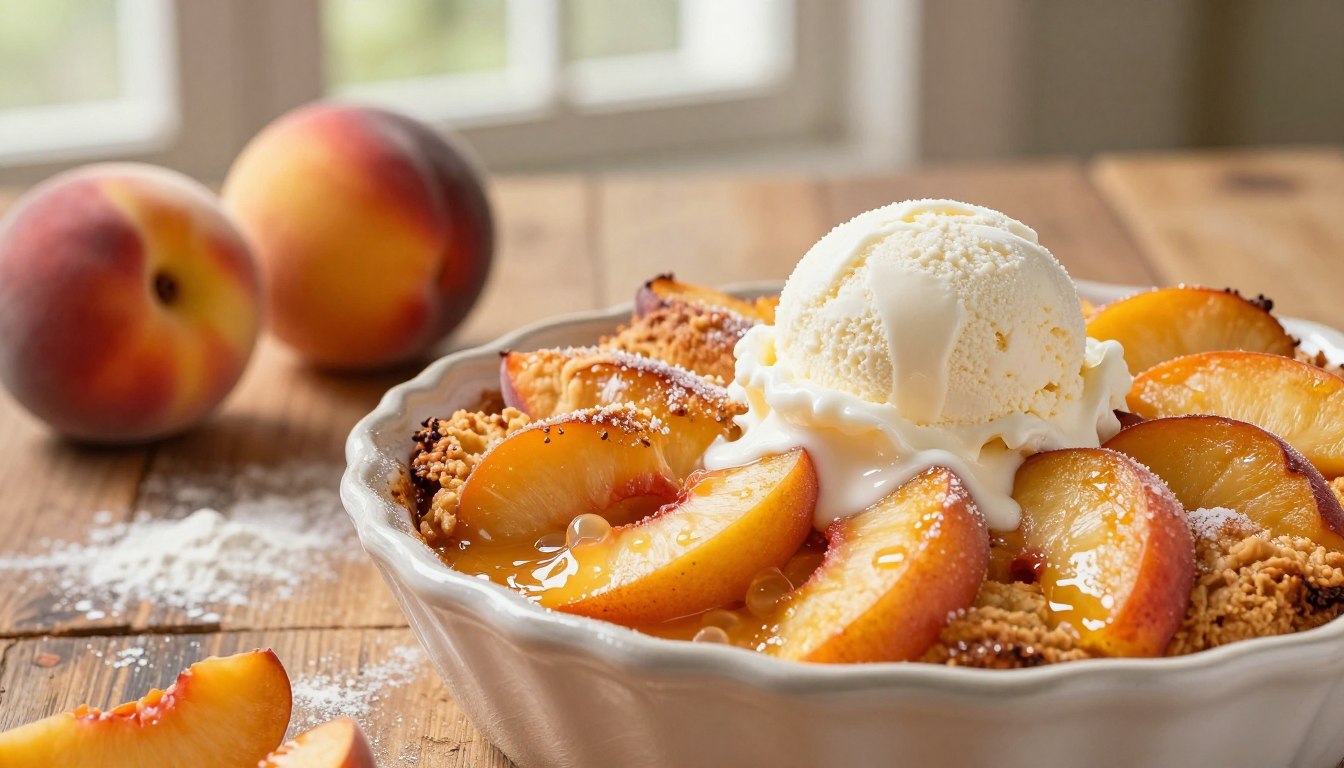
A solid peach cobbler recipe comes down to three things: ripe fruit, a balanced spice blend, and a topping that bakes up golden rather than soggy. Get those right and everything else falls into place. This version has been tested and refined since 2009, and it consistently produces a glossy, jammy filling under a buttery, craggly crust.
What separates a great result from a mediocre one isn’t exotic ingredients—it’s technique. The ripeness of your peaches, how you mix your dry seasoning, the temperature of your butter, and when you pull the dish from the oven all matter more than most recipes admit. This guide covers each of those points directly.
No advanced skills required. The recipe card below has the quantities and steps. The sections that follow explain the why behind each decision so you can make it your own.
Key Takeaways
What Makes This Peach Cobbler Recipe Work
Most cobbler problems trace back to one of three things: underripe fruit, warm butter in the topping, or pulling the dish too early. This recipe addresses each one directly. The filling uses a dual-sugar approach for flavor depth, cornstarch for controlled thickening, and lemon juice to sharpen the fruit’s natural sweetness. The topping relies on cold fat and minimal mixing to produce the right texture without luck.
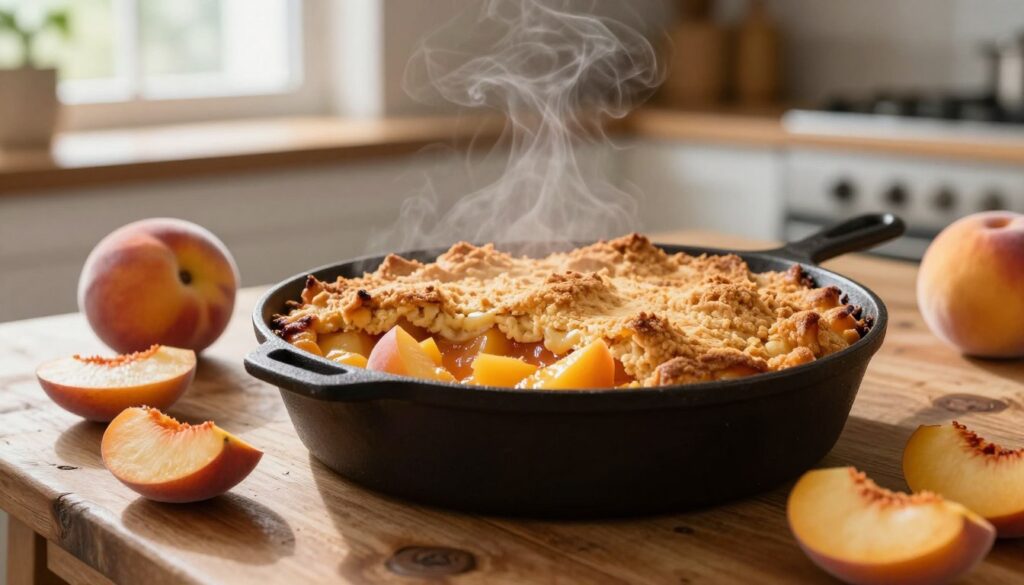
Sugar Balance and Spice Ratios
Combining granulated and brown sugar in the filling serves a specific purpose beyond sweetness. Granulated sugar dissolves cleanly and keeps the filling from turning muddy. Brown sugar’s molasses content adds a low, caramel-like depth that plain white sugar can’t replicate. Equal parts of each hits the right balance—sweet without being flat, rich without overpowering the fruit.
Cinnamon and nutmeg work as background notes, not dominant flavors. Too much of either and you lose the peach entirely. Fresh lemon juice does something more precise: it doesn’t add citrus flavor, it amplifies the peach’s natural acidity and makes the whole filling taste cleaner and more vivid. Don’t skip it, and don’t substitute bottled juice—the difference is noticeable.
Choosing and Preparing Fresh Peaches
Fruit selection is the single biggest variable in this dish. Ripe peaches release juice as they bake, which combines with the cornstarch to form a glossy, naturally thickened sauce. Underripe fruit stays firm and dry, producing a filling with none of that jamminess. Press gently near the stem—the peach should yield slightly without feeling mushy.
Peak season runs June through August, though freestone varieties available in September are often the sweetest of the year. If your peaches need a day or two, leave them on the counter at room temperature—refrigerating unripe stone fruit halts ripening and damages the cell structure. Peel them before slicing; skins turn chewy and slightly astringent once baked, and they pull away from the flesh in an unpleasant way.
Topping Texture: Why Cold Butter Matters
Butter temperature directly controls the final texture of the topping. Cold butter stays in small, solid pieces throughout the mixing process. When those pieces hit the oven heat, they create steam pockets that produce a flaky, slightly crisp layer on top and a tender crumb underneath. If the butter softens before baking, those pockets collapse and you get a dense, cakey topping instead.
Overmixing causes the same problem. Once the dry ingredients are moistened, stop. Lumps are intentional—they’re where the best texture develops. Drop or spread the topping loosely over the filling without pressing it down, and leave visible gaps. Those openings allow steam to escape upward rather than getting trapped under the topping and making it wet.
Peach Cobbler Recipe
The ingredient list is short and the method is direct. All measurements, timing, and step-by-step instructions are in the recipe card below.
Cobbler Recipe
Ingredients
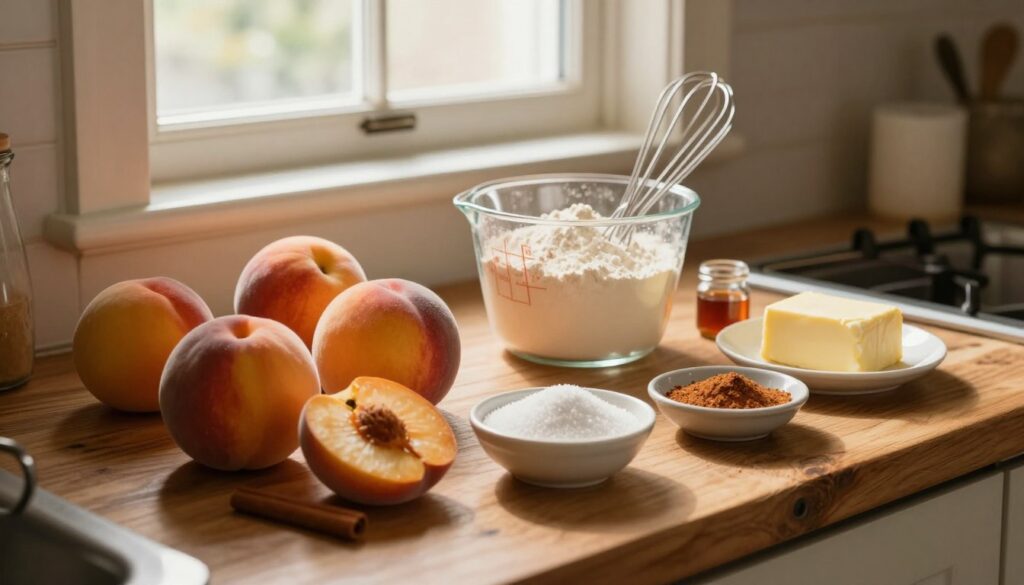
- 8 fresh peaches 3–4 pounds, peeled, pitted, and sliced
- 1/4 cup granulated sugar
- 1/4 cup packed brown sugar
- 1/4 teaspoon ground cinnamon
- 1/8 teaspoon ground nutmeg
- 1 –2 teaspoons fresh lemon juice
- 2 teaspoons cornstarch
Instructions
- Preheat oven to 375°F (190°C).
- Place the sliced peaches in a large mixing bowl.
- In a separate bowl, combine the granulated sugar, brown sugar, cinnamon, and nutmeg.
- Sprinkle the sugar-spice mixture over the peaches and gently toss to coat.
- Add the lemon juice and cornstarch; stir until evenly coated.
- Transfer the peach mixture to a baking dish and spread in an even layer.
- Prepare the topping as described (golden, buttery, crispy outside and tender inside) and spread over the peaches, leaving small gaps for steam.
- Bake for 45–50 minutes, until the filling bubbles and the topping is golden.
- Let the cobbler cool for 10–15 minutes before serving.
- Serve warm. Optionally, top with ice cream, whipped cream, or crème fraîche.
Notes
- Fresh peaches are essential for the best flavor and texture.
- The topping should be golden, crispy outside and tender inside.
- Let the cobbler rest after baking so the filling sets properly
Ingredient Roles Explained
Eight fresh peaches yield enough volume once sliced—they shrink considerably as they bake and release liquid. Slice them to around half an inch thick. Thinner slices break down too quickly and produce a mushy texture; thicker ones give you distinct pieces with some structure in the finished filling.
Cornstarch is what turns raw peach juice into a sauce. It gelatinizes around 203°F, which is exactly the range the filling reaches in a 375°F oven. Two teaspoons handles this quantity of fruit cleanly—enough to thicken without leaving a starchy or cloudy aftertaste. Mix it with the dry ingredients before it touches the peaches so it coats evenly rather than clumping in one spot.
Assembly and Technique Notes
Mix your dry seasoning—both sugars, cinnamon, nutmeg, cornstarch—together before it touches the fruit. This ensures the spices and thickener distribute evenly through the filling rather than concentrating in patches. Add lemon juice last, toss gently, and let the mixture sit for 10 minutes. In that window, the sugar draws out the peach juices and begins building the sauce naturally before the oven does its work.
Transfer to the baking dish in an even layer. Spoon the topping over loosely—don’t press, don’t smooth it flat. The rough, uneven surface is what gives you craggly golden edges and varied texture. Place the dish on a rimmed sheet pan to catch any overflow.
Baking Temperature, Doneness Cues, and Resting
Bake at 375°F for 45 to 50 minutes. Don’t rely on time alone—use two visual cues to confirm doneness. First, the topping should be deep golden-brown across the entire surface, not just the outer edges. Second, the filling should be actively bubbling up through the gaps, not just around the perimeter. If only the edges are bubbling with a pale center topping, add 5 to 8 more minutes.
Rest for 15 minutes before serving. The filling is still liquid at 375°F and needs time to set slightly as it cools. Skip the rest and it runs thin when you spoon it out. Give it that window and you get clean, scoopable portions with a sauce that clings to the fruit rather than pooling at the bottom of the dish.
Serving Ideas, Variations, and Storage
Vanilla bean ice cream is the standard pairing—the temperature contrast against warm fruit is part of what makes the dish work. Butter pecan or cinnamon ice cream add a more layered flavor profile. Crème fraîche works well for a tangier, less sweet finish. A light drizzle of chocolate ganache over individual servings is a less obvious but genuinely good combination. Toasted pecans or almonds scattered on top add crunch with minimal effort.
For variations: blueberries or raspberries stirred into the filling add tartness and color. A tablespoon of bourbon deepens the flavor and pairs naturally with brown sugar. A 1:1 gluten-free flour blend substitutes well in the topping with only a slight textural difference. Individual ramekins work if you want cleaner presentation—reduce baking time by about 8 minutes and watch for the same doneness cues.
Leftovers keep refrigerated for up to 4 days. Reheat uncovered in a 350°F oven for 12 to 15 minutes to restore some topping crispness—the microwave works but softens the crust. If you enjoy other baked fruit desserts, the same core techniques here—thickening fruit juices properly, keeping fat cold in the topping—apply directly to other homemade fruit preparations worth adding to your rotation. This peach cobbler recipe is a reliable foundation you’ll reach for every stone fruit season.