

Perfect Cornish Hen Recipe: Step-by-Step Guide
By Captain Cooking

If you want a Cornish Hen Recipe that looks special but stays simple, roasting is the most reliable method. Cornish hens are small birds that cook evenly, so you can focus on crisp skin, juicy meat, and clean seasoning. For another easy chicken option, try our crispy chicken tenders when you need something faster.
The key to a great Cornish Hen Recipe is preparation, not complicated ingredients. Dry skin browns better, even seasoning prevents bland bites, and correct temperature checks stop overcooking. For food safety, use a thermometer and follow poultry handling guidance from USDA FSIS.
This guide explains what matters: how to prep the birds, how to manage heat for browning, and how to rest the meat so juices stay where you want them. You’ll also get troubleshooting tips for common issues like pale skin, dry breast meat, or uneven roasting.
Key Takeaways
Why Cornish Hens Are a Smart Pick for Dinner
Planning dinner for two, or serving guests without carving a large bird? Cornish hens solve both problems because each bird roasts as its own portion. A Cornish Hen Recipe also gives you more control over browning since the skin surface is easier to dry and season evenly. When you keep the prep tight and the heat steady, the results are consistent.
The biggest advantage is predictability. Because the birds are similar in size, you can roast multiple hens and expect them to finish close together. That makes timing side dishes easier and reduces the risk of one bird drying out while you wait for another to catch up.
What Makes Cornish Hens Different from Regular Chicken
Cornish hens are smaller than a standard roasting chicken, so heat reaches the center faster. That shorter roast window matters because poultry can lose moisture quickly once it’s overdone. A Cornish Hen Recipe is often easier for beginners because the birds cook more evenly across breast and thigh.
You also get a higher skin-to-meat ratio. That’s useful if you care about browning because more surface area means more crisp bites. To take advantage of this, focus on drying the skin well and avoiding excess moisture in the pan.
Because the birds are compact, seasoning placement matters more. Rub seasoning under and over the skin where possible so the breast doesn’t taste flat compared to the legs. Small adjustments like this are what separate an okay Cornish Hen Recipe from a reliable one.
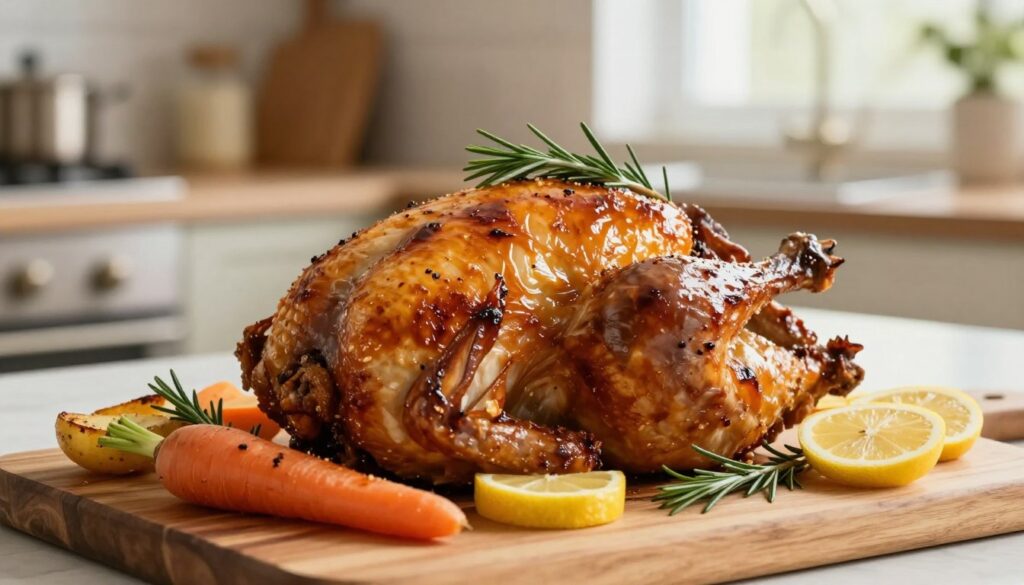
The Benefits of Cooking Individual-Sized Birds
Cooking individual birds like Cornish hens helps with serving, seasoning, and timing. If you’re making a Cornish Hen Recipe for guests, it also removes the pressure of carving at the table. You can plate each hen cleanly and keep portions consistent.
If you like experimenting, this is where a Cornish Hen Recipe shines. You can keep one bird classic with lemon and herbs, then make another slightly spicy with a homemade blend. For a simple seasoning idea, our homemade chili seasoning works well in small amounts alongside garlic and citrus.
With an individual serving bird, you control everything—from seasoning placement to browning. That control is useful because small changes in heat or moisture show up quickly on a smaller roast. Keep the pan from steaming, and your Cornish Hen Recipe will brown more reliably.
Cornish Hen Recipe
This Cornish Hen Recipe doesn’t require special gear—just a few basics that protect moisture and improve browning. The most important tool is a thermometer so you can pull the birds at the right moment. After that, it’s all about drying the skin and roasting with steady heat.

Roasted Cornish Hen (Golden & Juicy)
Ingredients
Main
- 2 Cornish game hens 1–1.5 lb each
- 2 tbsp olive oil or melted butter
- 2 tsp kosher salt
- 1 tsp black pepper
Flavor Boost (Recommended)
- 4 garlic cloves smashed (or 1 tsp garlic powder)
- 2 tsp paprika optional, for color
- 1 tsp onion powder optional
- 2 tbsp fresh rosemary or 2 tsp dried
- 2 tbsp fresh thyme or 2 tsp dried
- 1 lemon or lime, cut into wedges (for stuffing)
Optional (for moisture in pan)
- 1 cup chicken broth optional
Instructions
Preheat oven
- Preheat to 425°F (220°C).
Dry the hens
- Pat hens very dry with paper towels (this helps crispy skin).
Season
- Rub hens all over with olive oil/butter, then season with salt and pepper.
- Optional: add paprika, onion powder, garlic powder for extra flavor.
Stuff & tie
- Stuff each hen with lemon wedges + garlic + herbs.
- Tie legs with kitchen twine (optional) and tuck wing tips under.
Roast
- Place hens breast-side up in a roasting pan or cast iron skillet.
- Optional: pour 1 cup chicken broth into the pan (around the hens).
Baste (optional but recommended)
- Baste with pan juices every 15 minutes for extra color and moisture.
Check doneness
- Roast 45–60 minutes total, until thickest part of thigh reaches 165°F (74°C).
Rest & serve
- Rest hens 5–10 minutes before serving for juicier meat.
Notes
- Crispy skin tip: Drying the hens well is the #1 trick
- If skin browns too fast, loosely tent with foil for the last 10–15 minutes
- Storage: Refrigerate leftovers 3–5 days in an airtight container with juices
- Freeze up to 3 months
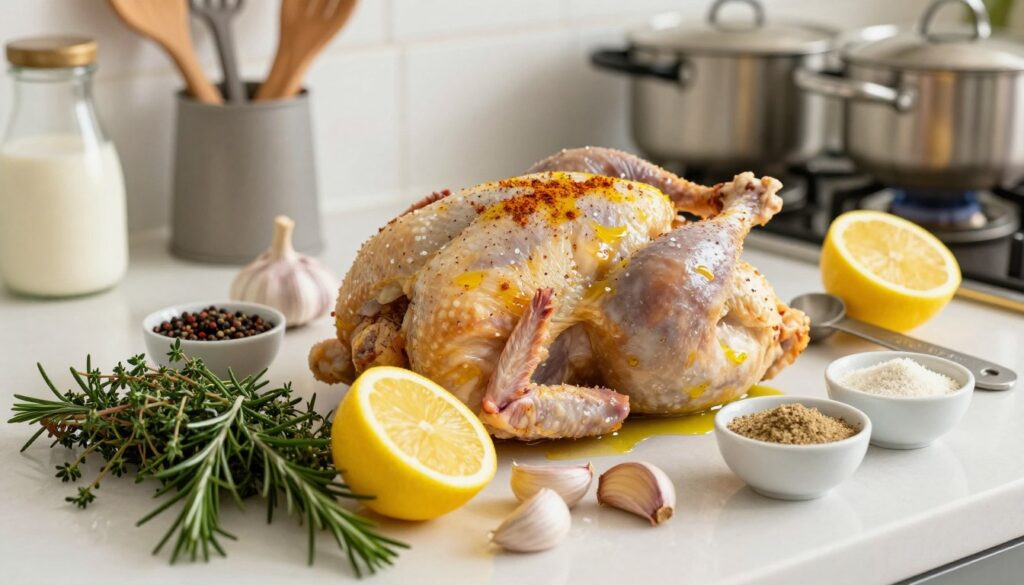
Tools for Cornish Hen Preparation
You don’t need expensive equipment for a Cornish Hen Recipe, but the right basics remove guesswork. A sturdy pan promotes even heat, and paper towels help you dry the skin so it browns instead of steaming. Most importantly, a thermometer confirms doneness without cutting into the meat too early.
Before you start, set up your workspace and pre-measure seasonings. This prevents over-salting and helps you apply seasoning evenly across the skin and cavity. For a Cornish Hen Recipe, small birds benefit from consistent coverage because every bite is close to the surface.
How to Roast Cornish Hens to Golden Perfection
Roasting is the most straightforward method for a Cornish Hen Recipe because it builds flavor through browning while keeping the inside moist. Focus on three things: dry skin, enough space around the birds, and accurate temperature checks. When the oven heat can circulate and the surface stays dry, the skin crisps instead of turning soft.
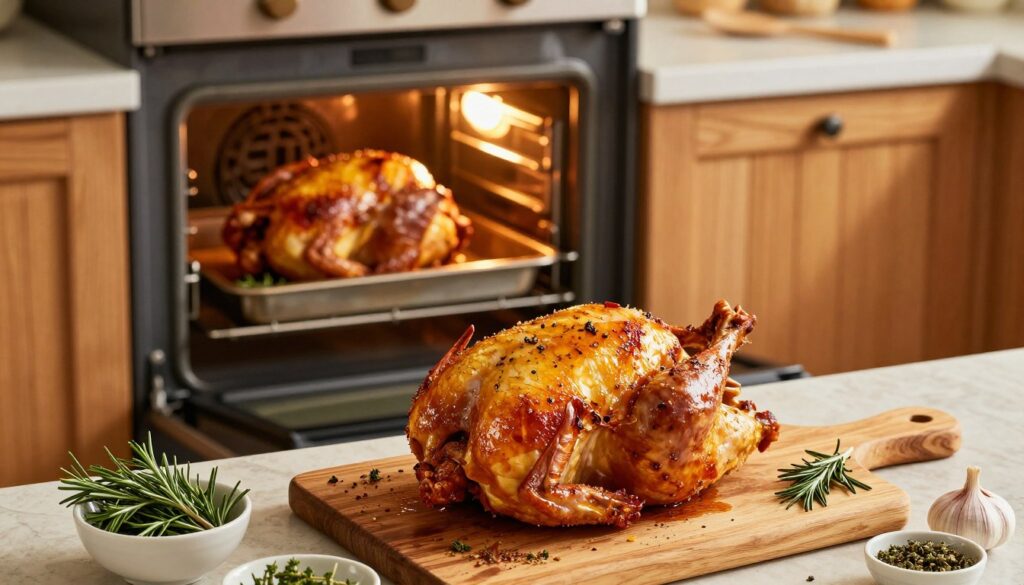
Roasting Times and Temperature Guidelines
The most dependable guideline is internal temperature, not the clock. In a Cornish Hen Recipe, check the thickest part of the thigh because it finishes later than the breast. Pulling the birds as soon as they reach the safe target helps protect juiciness.
Cook until the thickest part of the thigh reaches 165°F (74°C). Insert the probe without touching bone, since bone can give a false high reading. If the skin is browned early, keep roasting and tent loosely with foil only if needed to prevent over-browning.
Because the birds are small, temperature can climb quickly near the end of roasting. Start checking a bit before you think they’re done, especially if your oven runs hot. This single habit improves almost every Cornish Hen Recipe you’ll make.
Pro Tips
For better browning and juicy meat, prioritize dry skin and steady heat. If your Cornish Hen Recipe keeps coming out pale, the most common cause is moisture—either wet skin or a crowded pan. Give the birds space and let the oven do the work.
If your Cornish Hen Recipe turns out dry, it’s usually from overcooking. Use the thermometer early, then check in small intervals near the end. If the skin isn’t crisp, reduce moisture: dry the birds better and avoid excess liquid in the roasting pan.
What to Serve with Cornish Hen
Cornish hens pair well with sides that add texture and freshness. Try roasted vegetables for browning and contrast, mashed potatoes for a soft base, or garlic rice for a simple savory option. A crisp green salad helps cut through the richness and keeps the plate balanced.
If you want a simple drink pairing, choose something light and not too sweet so it won’t hide the seasoning. A squeeze of lemon over the finished bird and a sprinkle of fresh herbs adds brightness without changing the structure of your Cornish Hen Recipe.
Final Thoughts
You now have the core skills to make a Cornish Hen Recipe reliably: dry the skin, season with intention, roast with enough space, and verify doneness with a thermometer. Those steps protect moisture and improve browning without adding complexity. Once you nail the basics, you can vary herbs, citrus, and spice levels while keeping the same method.
If you have leftovers, use them in ways that protect texture. Pull the meat for a quick salad, fold it into a wrap with greens, or add it to a grain bowl with roasted vegetables. You can also simmer the bones with aromatics to make a light broth for soups.
Whether you serve a whole bird or split portions, the method stays the same. Keep moisture under control, check temperature early, and rest before cutting. With those habits, your Cornish Hen Recipe becomes repeatable, and you can change flavors without changing the process.
If you want more dinner ideas, explore Captain Cooking next. Our easy carbonara is a good option when you want something fast and filling, and it pairs well with simple side salads similar to what you’d serve with a Cornish Hen Recipe.