

Delicious Chicken Stock Recipe in 30 Minutes
By Captain Cooking

Chicken Stock Recipe in a shorter window is possible when you focus on collagen-rich parts, a steady simmer (or pressure), and clean straining.
This guide explains what matters most—bones, aromatics, and timing—so you get a stock with real body for soups, pan sauces, and grains.
Use the recipe card for exact amounts and steps, then use the tips below to control flavor, clarity, and texture.
Key Takeaways
Why Homemade Chicken Stock Is Better Than Store-Bought
Homemade stock lets you control the ingredients and the final salt level. Many packaged options rely on added sodium and stabilizers, while a homemade pot is built from bones, aromatics, and time.
With the right parts, this Chicken Stock Recipe also gives you natural gelatin, which adds body to soups and sauces without extra thickeners.
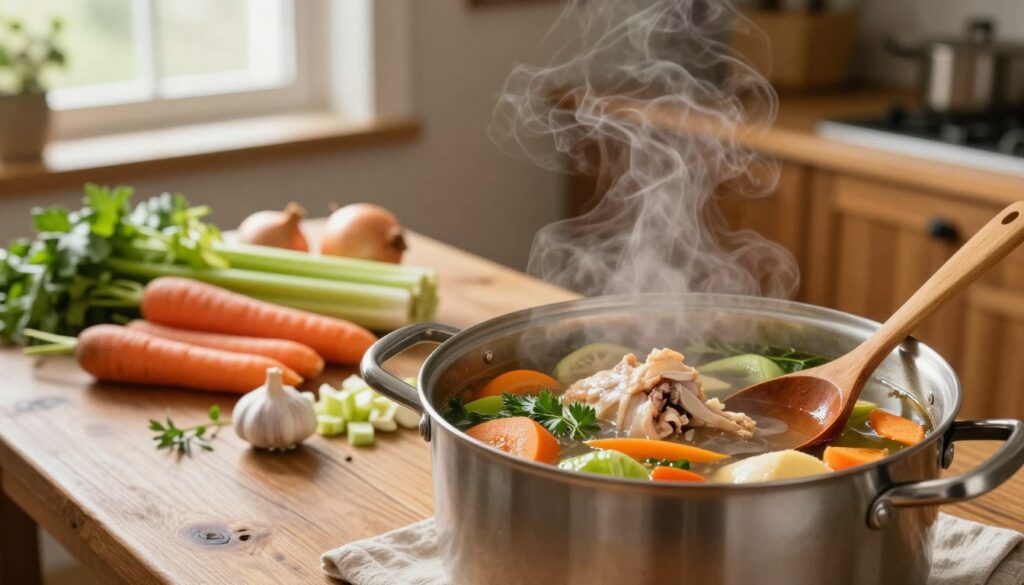
It can also reduce waste if you freeze bones and clean vegetable trimmings until you have enough for a batch.
Understanding Stock vs Broth
Stock is usually bone-forward, so it can set slightly when chilled. Broth is often meat-forward and tends to be lighter in body. Either works in a pinch, but a true stock gives sauces and soups a smoother finish.
Cost-Effectiveness and Environmental Impact
Homemade stock can stretch your grocery budget because it uses parts that are often inexpensive. It also cuts down on packaging when you store stock in reusable containers instead of buying cartons each week.
“Good stock comes from simple inputs: bones with collagen, steady heat, and careful straining.”
Once you understand the basics, the same Chicken Stock Recipe method is easy to repeat. Keep the process consistent, then adjust the aromatics to match what you’re cooking.
Chicken Stock Recipe
A reliable Chicken Stock Recipe depends on two choices: the chicken parts (for body) and the aromatics (for flavor). If you pick bones with joints and skin, you’ll get a stock that feels fuller without needing a long simmer.
Use the recipe card for measurements. The sections below explain how to choose parts and fine-tune the result.

Chicken Stock
Ingredients
- 2 to 3 pounds chicken parts wings, backs, necks, or carcass
- 1 large onion roughly chopped
- 2 carrots chopped
- 2 –3 celery stalks chopped
- 3 –4 garlic cloves smashed
- 1 –2 bay leaves
- 2 –3 sprigs fresh thyme or parsley
- 1 teaspoon whole black peppercorns
- 1 tablespoon apple cider vinegar
- 8 to 10 cups cold water
- Salt to taste added after cooking
Instructions
Method 1 – Instant Pot / Pressure Cooker (Quick Method)
- Place chicken parts into the pressure cooker.
- Add chopped onion, carrots, celery, garlic, herbs, and peppercorns.
- Pour in 8–10 cups of cold water.
- Add apple cider vinegar.
- Seal the lid and cook on high pressure for 30 minutes.
- Allow natural pressure release for best flavor.
- Strain through a fine mesh sieve or cheesecloth.
- Let cool, skim fat if desired, and season with salt.
Method 2 – Stovetop Method
- Add chicken and all ingredients to a large pot.
- Cover with cold water.
- Bring to a boil, then reduce to a gentle simmer.
- Simmer for 45–60 minutes, skimming foam in the first 10 minutes.
- Strain and cool as described above.
Notes
- Use chicken wings or backs for the best collagen and rich texture
- Apple cider vinegar helps extract minerals from the bones
- Do not add salt until the end to avoid over-salting
- Stock should become gel-like when chilled
- Store in fridge up to 5 days or freeze up to 6 months
Choosing the Right Chicken Parts
For fast stock, choose parts with connective tissue. Joints, skin, and cartilage break down quickly and give the liquid more body. This matters even more when you’re aiming for a short cook time.
Chicken wings for stock work well because the joints and skin release collagen quickly. Chicken backs add steady depth and are often inexpensive. If you have a leftover roast or rotisserie carcass, it can add a toasted note without extra work.
Mixing parts is an easy way to balance flavor and texture. Aim for a combination of collagen-rich pieces and a few meaty bones so the stock tastes rounded, not thin. Here are dependable options:
Tip: Freeze bones in a labeled bag until you have enough for a batch. Keep scraps “clean” (no bitter peels or spoiled pieces) so the stock stays balanced.
Aromatics That Elevate Your Stock
Onion, celery, and carrot create the baseline for most stock. Garlic can help, but keep it measured so it doesn’t dominate.
Fresh herbs add a cleaner finish than dried. Bay leaf and thyme are reliable, and parsley stems add aroma without turning the stock “green.”
Secret Ingredients for Maximum Flavor
Peppercorns and bay leaf add structure to the flavor. A small splash of apple cider vinegar can help loosen collagen from the bones, which is useful when you’re making a fast Chicken Stock Recipe.
Hold back most (or all) of the salt until the end so you can season for the dish you’re cooking.
Step-by-Step Guide to Making Rich Chicken Stock Fast
This Chicken Stock Recipe works with either a pressure cooker or a pot on the stove. The goal is the same: keep the heat steady, avoid a hard boil, and strain well.
Use the method that fits your equipment. Pressure is faster and efficient, while stovetop gives you more visual control over the simmer.
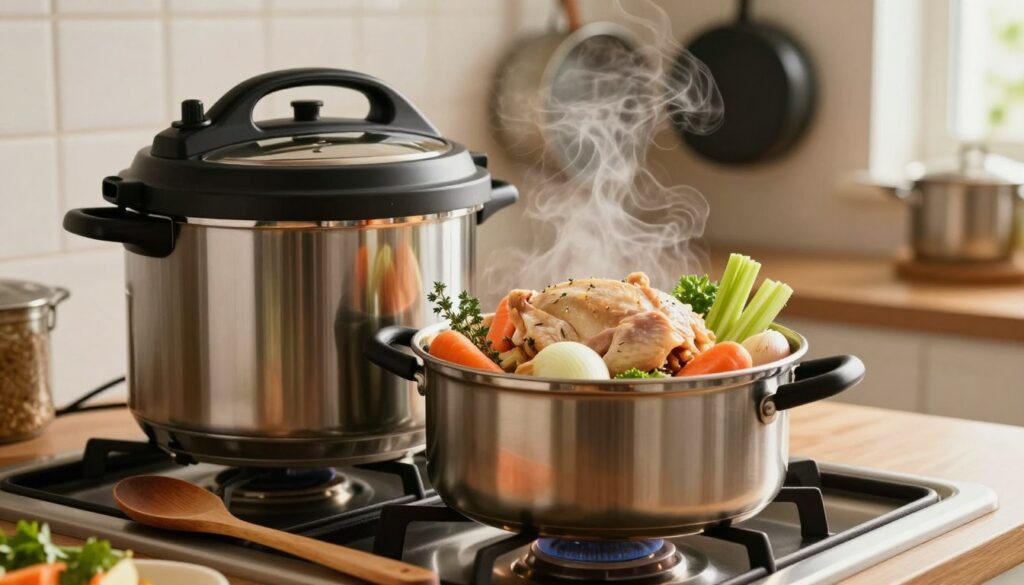
Preparing Your Ingredients
Prep matters because it keeps the cook time consistent. Rough-chop the vegetables so they fit the pot and release flavor quickly.
If you’re using frozen bones, there’s no need to thaw. Start with cold water so the stock extracts flavor as the temperature rises.
Pressure Cooker and Instant Pot Method
Pressure cooking speeds extraction because it raises the cooking temperature in a sealed environment. Follow the recipe card for timing, then use the checklist below to keep the flavor clean:
For a fast Chicken Stock Recipe, pressure helps you get body quickly. The vinegar is optional, but it can support collagen extraction when you want a fuller mouthfeel in a shorter time.
Stovetop Chicken Stock Alternative
For the stovetop method, cover the ingredients with cold water and bring the pot up gently. Once it reaches a simmer, lower the heat so the surface barely bubbles.
Skim the foam early if you want a cleaner look and milder flavor, then keep the simmer steady until the stock tastes complete.
Stovetop stock takes longer than pressure cooking, but it’s easier to control clarity because you can keep the heat very gentle.
Straining and Cooling Your Stock
Strain through a fine sieve. For a clearer stock, strain a second time through cheesecloth or a clean towel.
Cool the stock quickly in smaller containers or an ice bath, then refrigerate or freeze according to the notes in your recipe card.
Recognizing Perfect Stock
A strong stock smells clean and savory, not sour. It should look clear to lightly hazy, and it often firms up a bit when chilled if you used collagen-rich parts.
If it sets too firmly, dilute it when you cook. If it doesn’t set at all, it can still be useful—just reduce it for more body.
Finishing Touches and Troubleshooting
Season after cooking. Stock concentrates as it simmers and can concentrate again if you reduce it for sauces. Adding salt at the end helps you avoid oversalting.
If you want a stronger flavor, simmer the strained stock briefly to reduce it, then cool and store.
Cloudy stock usually comes from a hard boil or stirring that breaks ingredients apart. It’s still usable, especially in soups and stews.
If you want it clearer, strain again through cheesecloth and keep the next batch at a gentler simmer.
Final Thoughts
This Chicken Stock Recipe gives you a dependable base for everyday cooking. Use it to build soups, loosen pan drippings into a quick sauce, or cook grains with more depth.
For safe handling, cool stock quickly and avoid leaving hot food in the temperature “danger zone” for long periods. Learn more about the USDA temperature danger zone and cooling basics.
For storage, follow the notes in your recipe card and choose containers that match how you cook. Smaller portions cool faster, thaw faster, and are easier to measure for soups and sauces.
If you’re building a weeknight plan, stock pairs well with meal prep basics like shredded chicken for quick soups and bowls.
Keep stock in airtight containers and label portions so you can grab the amount you need without thawing a full batch.
Beyond soup, use stock to braise vegetables, loosen gravy, or cook rice and quinoa. If you want a crispy main to go with a stock-based sauce, try chicken tenders and serve them with a simple reduced stock pan sauce.